
2026: The end of airdrops as we know it

Airdrops were supposed to be your ticket to the good life, but the reality is far from what most KOLs are painting.
Airdrops are no longer as lucrative as before, with most people wasting their time grinding for scraps.
The era of rewarding low-value tasks is over, so I’m choosing to play a completely different game.
These are the 5 mindset shifts to the strategy that I’ll use in 2026 to attract airdrops naturally:
Grinding tasks no longer work
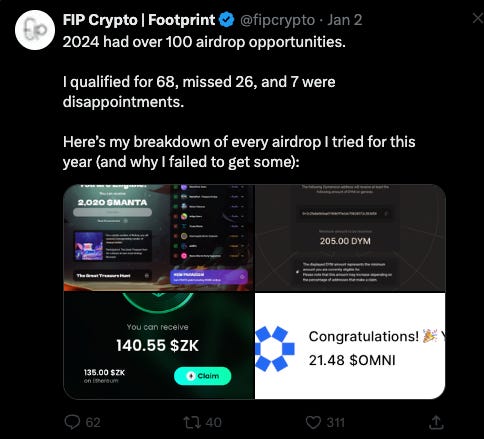
2024 was a good year for my airdrop haul.
I received decent allocations just by completing campaigns for different projects, particularly those from Galxe.
Campaigns used to be big events that captured a lot of hype whenever a project launched one.
Even for those who have launched a token, everyone would speculate about the possibility of an S2 drop.
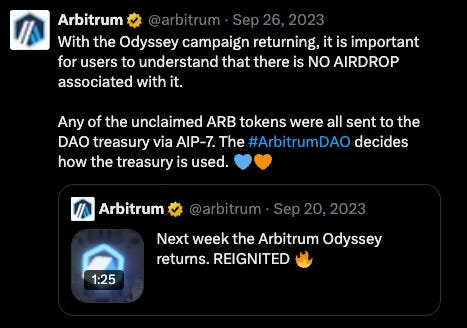
We would rush in to complete all the tasks and find strategies to maximise our capital and fees.
But now, I barely see anyone talking about campaigns any more.
I’ve lost the motivation to talk about them (or even complete them), because they’ve been slowly burning me out:
It feels like yet another job where I’m completing these ‘mindless’ tasks of swapping $5 or adding $10 of LP into a DEX, in hopes of winning a prize pool or the airdrop.
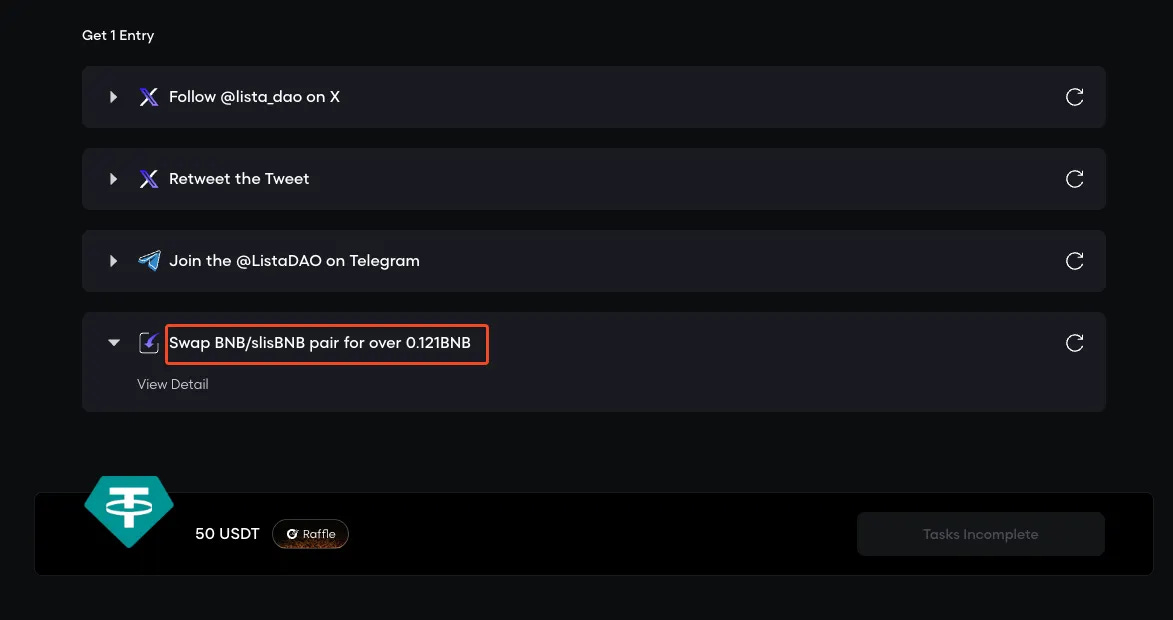
Where some of these projects will be ones that I never touch again because the UI is bad (or I have no use for it).
I’ve realised that grinding mindlessly burns me out:
We force ourselves to interact with protocols that we don’t even like, just in hopes for some airdrop in the future, which may not even be that good.
Grinding places too much expectations on the result, because we don’t enjoy the process.
And when the reality is much worse than the expectation, we will be massively disappointed and eventually burn out.
I’ve learnt to focus on tasks that energise me instead of keeping me motivated, mainly through apps that I truly enjoy using.
I still see these quest platforms and campaigns as a good way to explore new protocols, but there are too many options right now.
That’s where judgment becomes the most important skill:
We need to know which opportunities we should do, or ones that we should skip based on our time and capital constraints.
Finding those that give the highest ROI (in both profit and time) is how I plan to optimise my strategies.
We can’t rely on airdrops alone to make money
Airdrops used to be life-changing events, with many getting high allocations by clicking a few buttons, or even through multiple wallets.
But that’s no longer the case with the current wave of airdrops:
They’re at best slightly profitable, or just enough to cover the fees that we spent throughout the campaign.
Without even considering the amount of time we burned interacting with these projects.
The returns that we get from airdrops keep getting lower as allocations are split among more participants (or greedy projects giving low allocations to the community).
So I’m taking a new approach next year:
I make money by interacting with the project first, while viewing the airdrop as just a bonus.
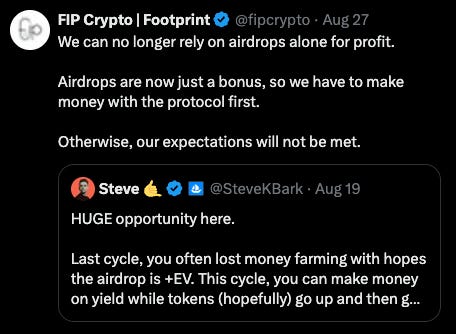
That way, I don’t get overly disappointed with an airdrop, as I don’t see it as part of my return.
I’ve learnt that burning fees (such as on bridges or perp DEXes) in hopes of a good airdrop never end well.
Especially if it’s part of a points campaign with known criteria, the campaign becomes a PvP battle of who’s able to burn more fees (just like any trading competition).
I made that mistake for Orderly/LogX by spamming volume and barely got anything back to cover my fees.
So I’m finding apps that I enjoy using and can make money from first (LP-ing, yield, swaps), and then getting airdrops along the way.
This will be a challenge, especially for me (since I’m a bad trader). But I’m forcing myself to see airdrops through this lens to not be over-reliant on them.
There are other ways to make money in crypto, and it doesn’t have to just be through airdrops.
And it’s a bigger surprise when our onchain footprint gets recognised by other projects in retroactive airdrops:
Sybils have ruined airdrops
While it was once an ‘easy’ money glitch, Sybils have made airdrops a tougher game now:
Allocations are overdiluted across more wallets
More aggressive Sybil filtering being implemented
Higher minimum thresholds to be eligible
Sybils try to game the system by pretending to be a real user, while adding zero value to the ecosystem.
Their main goal is to extract as much value from the ecosystem (sometimes even by the team itself).
Projects are playing an escalation game with Sybils by coming up with stricter criteria to identify real users and eliminate Sybils.
While these farms adapt by finding new loopholes to pass through these filters.
The real users are at the losing end, as even though we’re ‘innocent’, we’re caught in the crossfire:
Some of us are getting unfairly filtered out just because our activity is too similar to a Sybil.
It’s getting harder to prove that we’re a real user, instead of someone who’s gaming the system.
But if we understand and apply this concept, it becomes easier to stand out:
Airdrops are a value transfer
Airdrops are no longer about how many transactions you spend, or even how many fees you burn.
Those were part of the old playbook, which no longer works anymore.
With this new era, this is the only rule that matters:
If you don’t add meaningful value to the ecosystem, you won’t be considered for the airdrop at all.
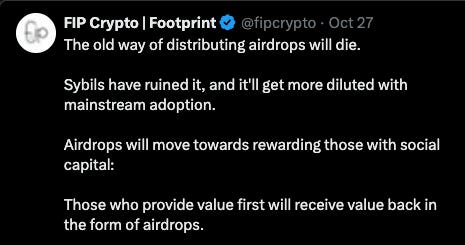
And this is the tricky part about this game:
Projects get to decide what contributions are valuable, and what aren’t.
You may think that you provide a lot of value, and everyone would have the same thought.
I’ve seen so many posts where they list down every single contribution they did, but still received a big fat zero for their allocation.
But if the project truly cares about the community, it will do its best to find and reward those who provide meaningful contributions.
There’s always a risk that the project you choose could completely disregard your contributions.
So there’s really no need to mindlessly farm an airdrop:
We get rewarded by being an active, genuine user or contributor.
I shared more about how to give value here.
And to truly outcompete Sybils, we need to prove that we’re high-value individuals with this asset:
Reputation is the endgame for airdrops
To win the Sybil war, we need to build a trusted reputation.
Reputation is the only metric that can’t be meaningfully gamed by Sybils, as it can only be earned.
Reputation is what others think about you, based on the value that you provide to them.
The more people that you’re able to impact meaningfully, the more trust you build, and the more credible your reputation becomes.
Projects (that care) will want to reward those who are ‘most deserving’ of their airdrop, and they will use your reputation as a factor.
Views or other vanity metrics won’t matter, it is the depth and quality of your contributions that determine your allocation.
So choose this harder path and play the long-term game to get outsized returns in the future.
Build a reputation that consistently compounds and becomes a magnet that attracts airdrops naturally (instead of you having to actively chase them).
Build a reputation that is based on trust, because you say what you did onchain.
The path to long-term wealth is through a Signal Creator, as I share my full strategy here.
If you are tired of mindless grinding for airdrops, build a reputation that compounds (instead of burning out), and let rewards come to you automatically just by being yourself:
Join the 30-Day Signal Creator Challenge here.