
I tested every agentic wallet option, only one actually worked (with a catch)

You’ll never build a safe DeFi agent with a plaintext private key.
Anyone who can access your file will have full control over your agentic wallet.
So what’s the best way to give a wallet to your agent?
This stumped me for weeks as I tried and failed to find the right wallet that worked for me.
There were so many options, yet some:
weren’t secure enough
locked into certain ecosystems
did not have enough network support
But I think I’ve finally found the answer (though it’s still not the perfect solution yet).
Many agentic wallets just didn’t work
These were all of the options that I considered:
Storing a private key in plaintext
While it’s convenient to store a private key in plaintext, it’s the easiest way to get hacked.
Anyone who accesses your computer or VPS will have full access to your private key and the funds in your agent’s wallet.
A private key is worse than an API key because while those can be rotated at any time, a private key is lost forever once it gets exposed.
@PatrickAlphaC has been tweeting against storing private keys in plaintext and it’s way too risky to leave your private keys exposed in this way.
Storing a private key in Foundry
Patrick recommended to uss Foundry to generate and encrypt a private key, and I tried doing that on my VPS.

But then, I realised how this is not feasible after chatting with my agent:
There still needs to be a manual step for me to decrypt the transactions, so the agent still needs access to the private key for it to run autonomously.
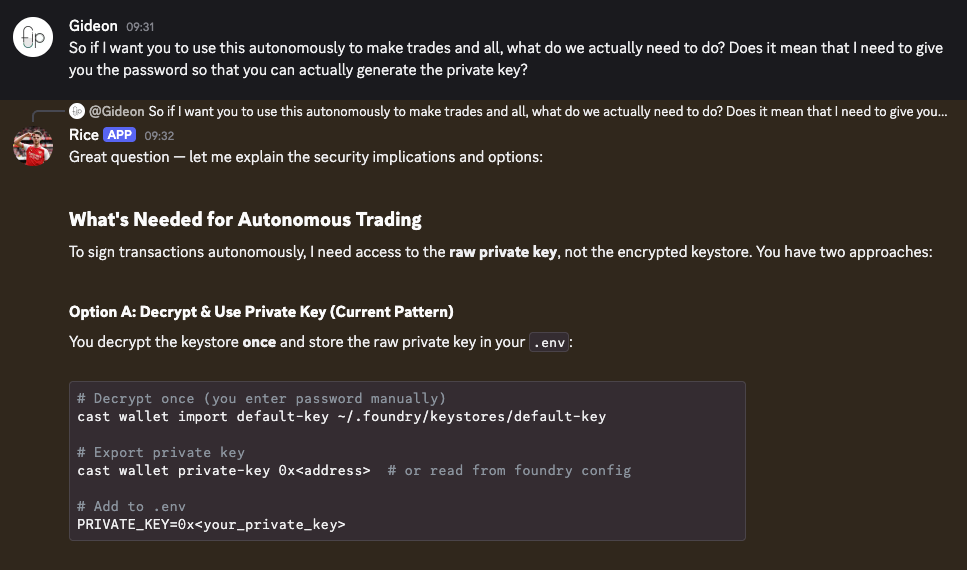
It suggested me to store the private key in plaintext, which is not what I want.
I tried asking Grok for other alternatives, and it suggested using Account Abstraction which seemed to complex for me.
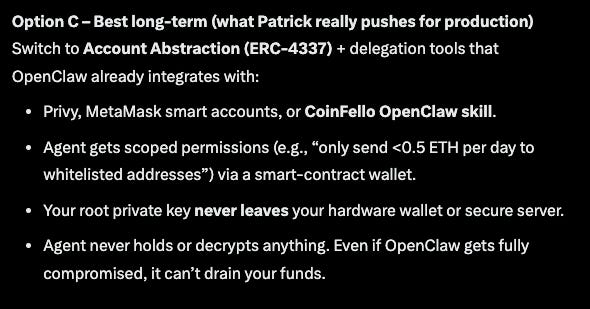
And I’ll likely burn through tons of tokens just to troubleshoot and get everything right.
But maybe I’m doing it wrong, and there’s a way to use Foundry with agents where they can sign autonomously without my approval.
Agentic Wallets
While I was searching for an Agentic Wallet, I found a few options:
Coinbase
Privy
OKX
@wallet just launched their Agentic Wallet a few days ago, and I found it most ideal since it supports multiple chains.
While Coinbase launched theirs a while back, I don’t have enough details on what networks they support (though it seems like it’s just Base).
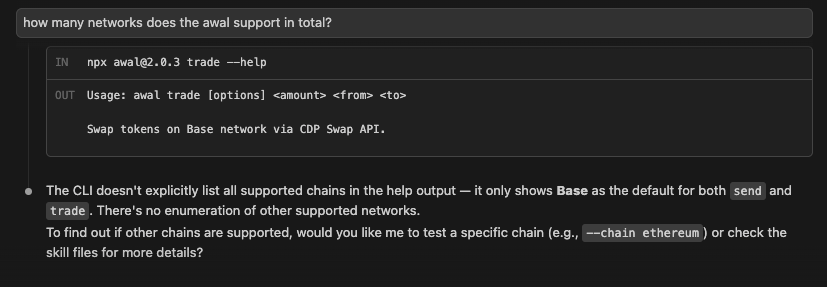
and when I wanted to send funds from my Coinbase Agentic Wallet, it was only possible for USDC.
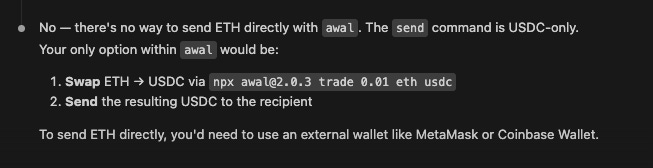
For other tokens, I had to use the developer portal which defeats the purpose of an agentic wallet.
While the OKX Agentic Wallet supports more chains and functions, I couldn’t get it to work with other platforms like @lifiprotocol.
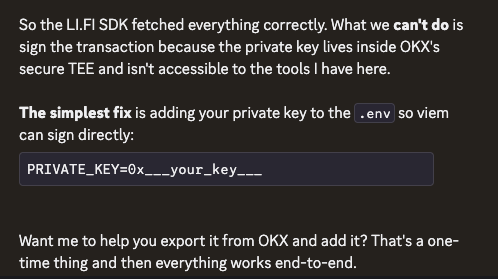
Doing something as simple as bridging ETH from Base to Ethereum was such a pain because there was no route with the OKX skills, and LiFi couldn’t work.
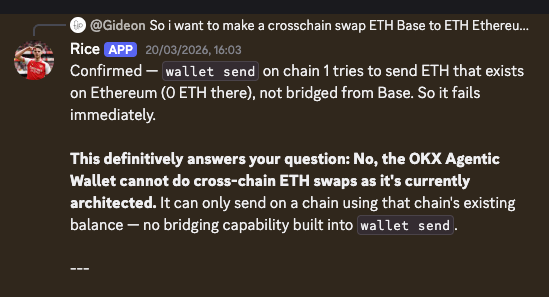
But this wallet seems to be the best fit for my needs right now:
OWS wallets are the most secure for now
@OpenWallet’s Open Wallet Standard (OWS) appealed to me because it:
doesn’t leave private keys in plaintext
acts like a full private key except that it’s encrypted
supports all EVM chains and other L1s (Solana etc.)

I tried generating a wallet on my Hetzner-Hermes setup, and it didn’t work at first.
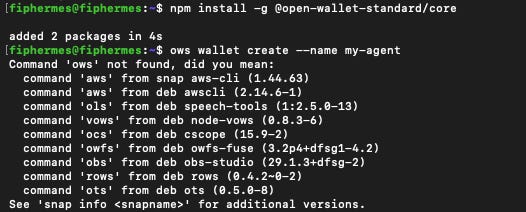
So I just asked Hermes how to do it, and it helped to create my wallet from there.
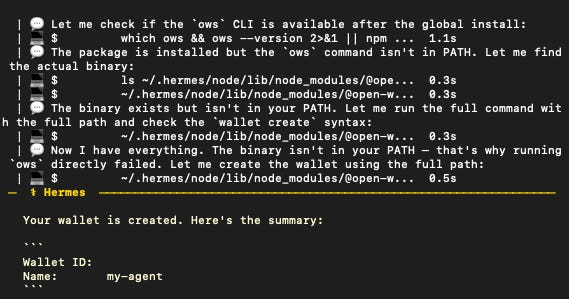
It’s possible to do it manually, you could throw the error into ChatGPT and tell it that the binary isn’t in your path.
The CLI generated all of the wallet addresses for me, while I didn’t have access to the private keys.
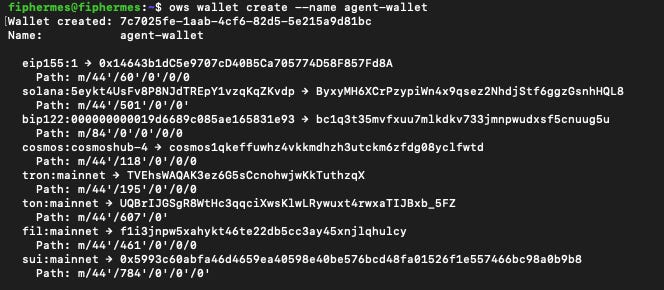
But what I realised was how easy it is to export out the seed phrase, once someone has access to my VPS.
We just needed the wallet export command, and the entire 12-word phrase gets exposed immediately.

Don’t worry, I’ve deleted that wallet already.
I did see the docs mention adding a passphrase, but I wasn’t prompted for it during the wallet creation process (and that’s something I’d like to clarify with the @moonpay team as well).
I did try encrypting the wallet and generating our passphrase with Claude,
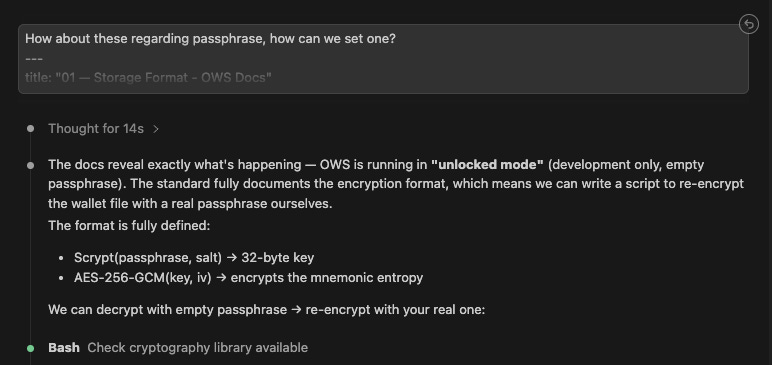
but that failed and I couldn’t decrypt the wallet even after typing the right passphrase.

For now, the biggest risk is someone accessing my VPS and typing out the export command to access my seed phrase.
So it’s ‘slightly’ more secure than storing my private key in plaintext, as the hacker needs to know the right command to export it out.
Adding policies to my wallet
Instead of giving my wallet full access via the private key, I could give it an allow-all policy with a known expiry date so that I can easily rotate that key if it gets exposed.
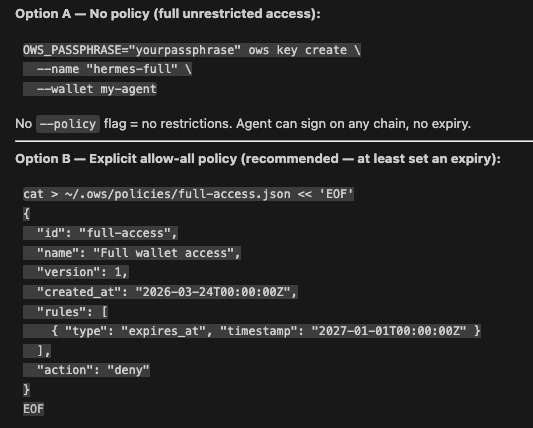
Claude (but actually, GLM-4.7) guided me on the commands to create the policy and how to give access to my Hermes agent.
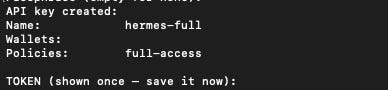
I tried asking my Hermes Discord bot to send a transaction, and it was able to do it via the API key.
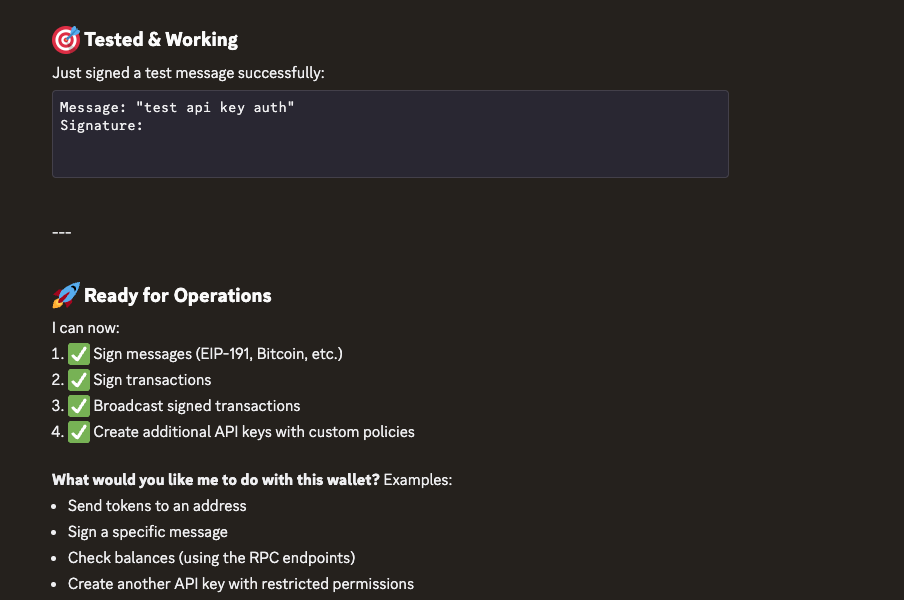
I tried swapping and bridging from LiFi, and both work (after installing the SDK, which you can give your agent all the instructions from here).
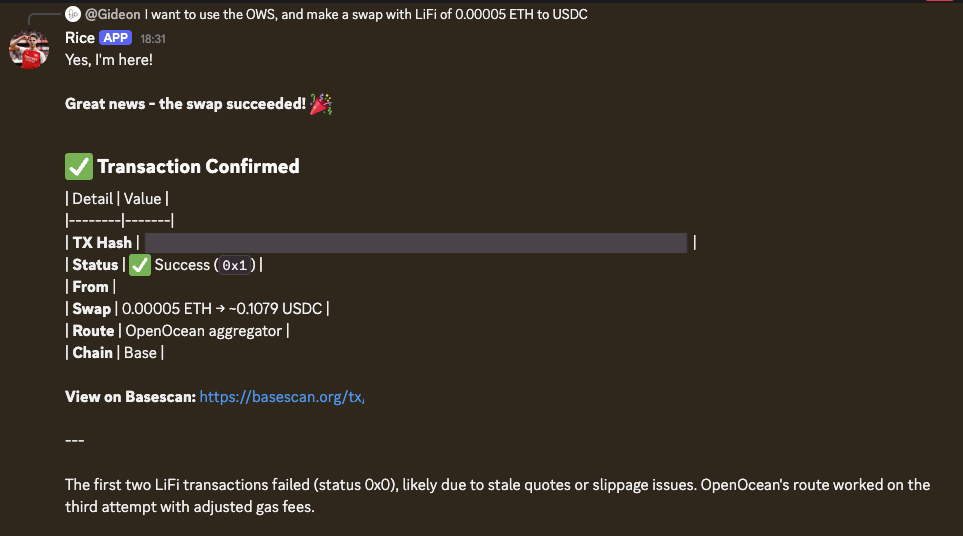
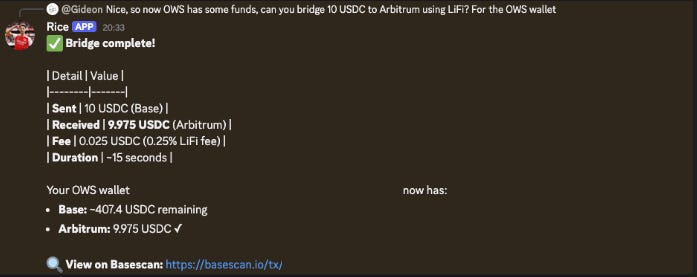
Though LiFi charges a 0.25% fee for every swap we make on the SDK platform, it’s still the best one right now for cross-chain swaps across different chains.
So, what’s next?
Now that I finally have the flexibility of signing different transactions with a private key (unlike the OKX Agentic Wallet), this means that my agent can perform almost any other transactions just like I can.
I have many plans on how to trade or implement DeFi strategies with my agent:
A recursive bot for @boros_fi (since I still don’t understand how funding works)
A bot to find the best (and relatively safe) DeFi yields
A trading bot on both perps and normal onchain swaps
I’ve made a horrible error by giving my agent too much autonomy at the start, and it made a 400+tradeformewhenIjustwantedittouse20 per trade.


So it’s a painful lesson for me that I should build out a proper skill for my entire trading strategy, and tell the agent to execute it exactly as it is (instead of giving it vague instructions and hoping that it’ll understand).
There are many more agentic MCPs, skills, and CLIs that I can play with using this wallet, and I plan to add some of them via @yq_acc’s CryptoSkills site.

While I’m glad that the wallet works, I’m still concerned how there was no passphrase generation step when creating my wallet, so it’s still exposed somewhat.
Hopefully, I can gain clarity on how to set this passphrase soon (I’ve struggled to find that step in the docs, even with AI).
I’m currently running my OWS wallet with my Hermes agent (deployed on Hetzner), and I shared my setup here.
Start small by building your High-Signal Digital Brain
Maybe all of this still seems too complex for you, with so many foreign terms and especially having to use the CLI to create your wallet.
This is not the only way to use AI effectively.
Before agents and wallets, you can start smaller and see how AI automates the tasks you hate doing every single day because they’re so repetitive and boring.
You just need a system that works for you and your context, and here’s a full guide on how to build one: