
The fundamental problem with airdrops (that no one wants to admit)
Everyone keeps asking why airdrops feel worse this cycle, and the answer is simple:
Projects are rewarding engagement instead of alignment.
Airdrops are no longer fun. They’ve become a predictable game that we grind for and get a result that we’re massively disappointed with.
Airdrops have changed since the
And misaligned incentives are the single reason why we’re in this current limbo for airdrops:
Incentives drive behaviour
Taking from Charlie Munger’s famous quote:
Show me the incentive and I’ll show you the outcome
Which, in airdrop terms, translates to:
Tell me how you measure my value to your ecosystem, and I’ll show you how I behave
People will optimise their behaviours around the reward, including ones that the projects never wanted to reward in the first place.
If they choose to reward a certain metric, humans will exploit any loophole to maximise their returns on it.
It’s just like those ‘new account promos’ we get for creating an account with any Web2 app.
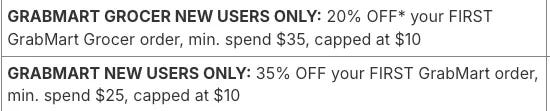
They will start referring their friends and family, or even creating accounts for them to maximise the amount of promos they get.
Humans are incentive-driven, so anyone can cultivate certain behaviours by giving us a reward to do it.
Just like how my country is giving out $50 to walk different trails.
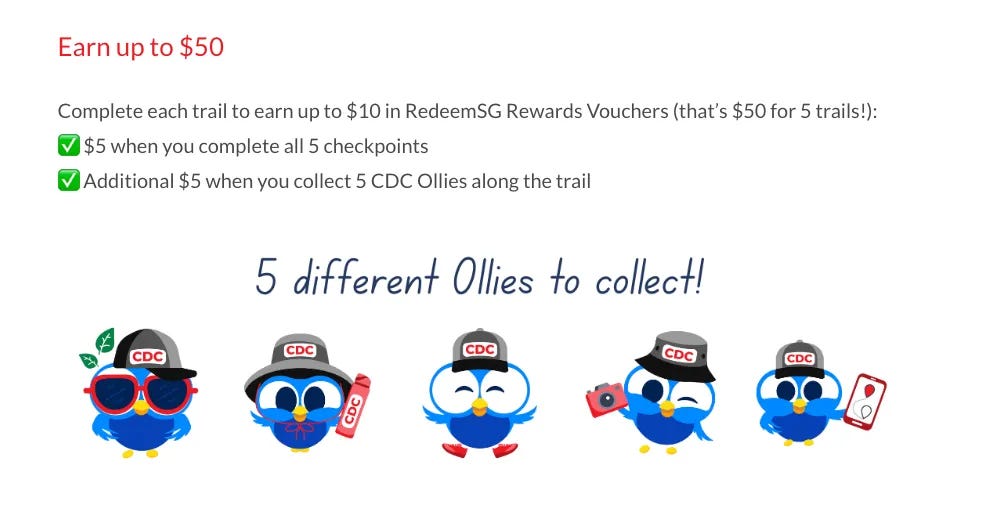
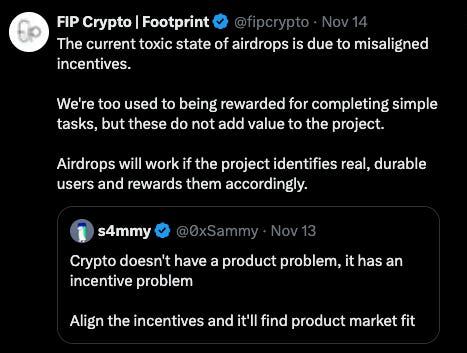
The same applies to airdrops:
What teams choose to reward shapes:
The type of user they attract
The quality of the ecosystem they build
And this is what happens when the incentives are misaligned:
Airdrops reward the wrong actions
Not all airdrops are doing this, but some reward actions that build short-term hype.
And in the process, they sacrifice long-term growth.
This happens when projects choose to reward actions that let them capture the most attention.
Likely, because their product is just not good enough.
Incentives are used to compensate for the lack of usefulness.
Just like how some content creators use giveaways to give a quick boost to their views and follower count.
They’re effectively throwing money at users with the airdrop and hoping that they’ll stay, but many would leave once there are no more incentives.
Low-value actions start being rewarded, including:
Completing simple social tasks (likes, RTs, and follows) to boost engagement
Spamming messages on Discord to grind roles
Giving a list of simple onchain tasks to complete as campaigns
Doing random transactions on their testnet
Because the barrier to entry is so low:
These misaligned incentives attract mercenary behaviour.
Farmers show up, complete a few tasks, claim the airdrop, and leave.
If they don’t get the reward they expected, then they’ll start being toxic too.
Projects get a nice bump in their metrics, but they eventually die off once the incentives dry up.
Just like what happened to Taiko when their Trailblazer campaign ended.
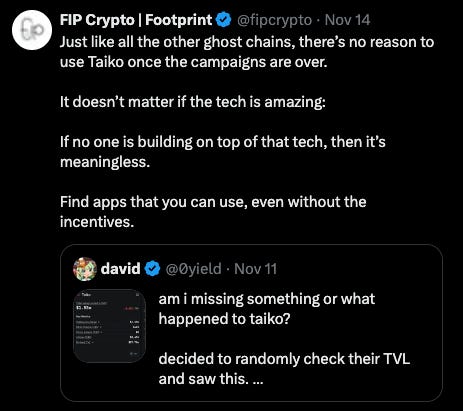
The same also applies to InfoFi airdrops:
Projects announce an allocation to yappers
Yappers grind out the leaderboard for rankings
They claim and dump the rewards at the end of the season
No one talks about them on the timeline anymore
InfoFi awards attention, and not value.
Attention without trust is not valuable, but most projects reward pure attention alone.
Yappers don’t talk about what they believe in, they talk about the project that pays them the most.
All we need to do is look at projects that held yapper campaigns but are no longer distributing rewards.
Who talks about them now, except for the random paid KOL shill?
Story
Berachain
Magic Newton
Novastro
Caldera
The list goes on and on.
But that’s not the only way to conduct an airdrop:
Incentives reveal what the team actually cares about
Whatever the project communicates on the timeline can be taken with a grain of salt.
Some of them make claims just to be popular or build up hype:
“We value the community”
“We want to play long-term games”
“We are not here to farm users”
But the incentives reveal their true goals, based on the type of campaigns that they run.
A great post by @0xDezman summarises this point very well:
Are projects attracting missionaries or mercenaries?
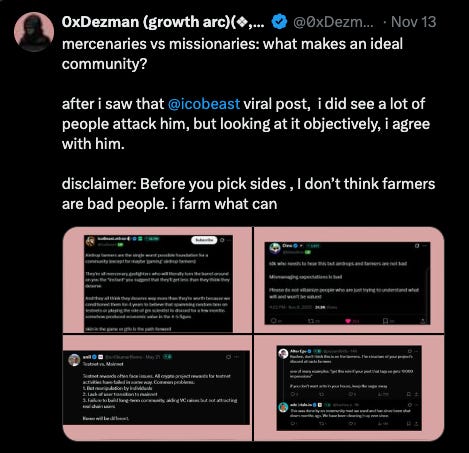
The rewards determine the type of users they attract, which is either:
Mercenaries who fake alignment to get rewards
Missionaries who truly believe in the project and are durable users of the product
Yes, projects face a tough job in differentiating between the two and identifying their true, loyal fans.
But if the incentives are designed to reward vanity metrics or short-term attention, they will attract more mercenaries than missionaries.

Which is why I have no motivation to interact with any project with a yapper leaderboard.
Most choose this ‘easy’ way out to use metrics that can be quantified easily, but there are other ways to identify and reward missionaries too:
Airdrops can reward the right behaviours
Time and time again, I’ve seen complaints about how they did “X, Y, and Z” but were ineligible for the airdrop.
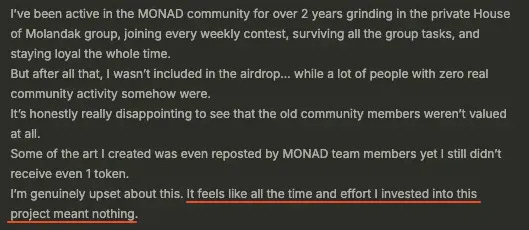
Of course, all of us would claim that our contributions are valuable to the project.
Who would admit otherwise?
So it’s up to the project to define what the most valuable actions are to them.
Or what actions signal the greatest conviction and alignment with their product.
Just like how every project can customise its yapper leaderboard to reward the ‘right’ behaviours.
Some key points from @Punk9277’s article that mentioned some indicators of incentivised alignment:
ICO participation
TVL commitments
Holding community NFTs
Visible social advocacy
Incentives have to encourage high-value, meaningful contributions, and they must involve cost.
Otherwise, anyone (including mercenaries) can do these actions and get the same rewards as long-term believers.
And that’s why I still believe this type of airdrop rewards alignment the most:
The best airdrops come when the incentives are not known
When no rewards are announced beforehand, there is less farming.
There won’t be zero farming, but it’s less attractive for Sybil farms to spam a protocol when there are no incentives.
Airdrops used to be fun because they were like surprise rewards that we got from interacting with the project.
But this joy has been killed by projects that actively shill their incentives to attract users or yappers.
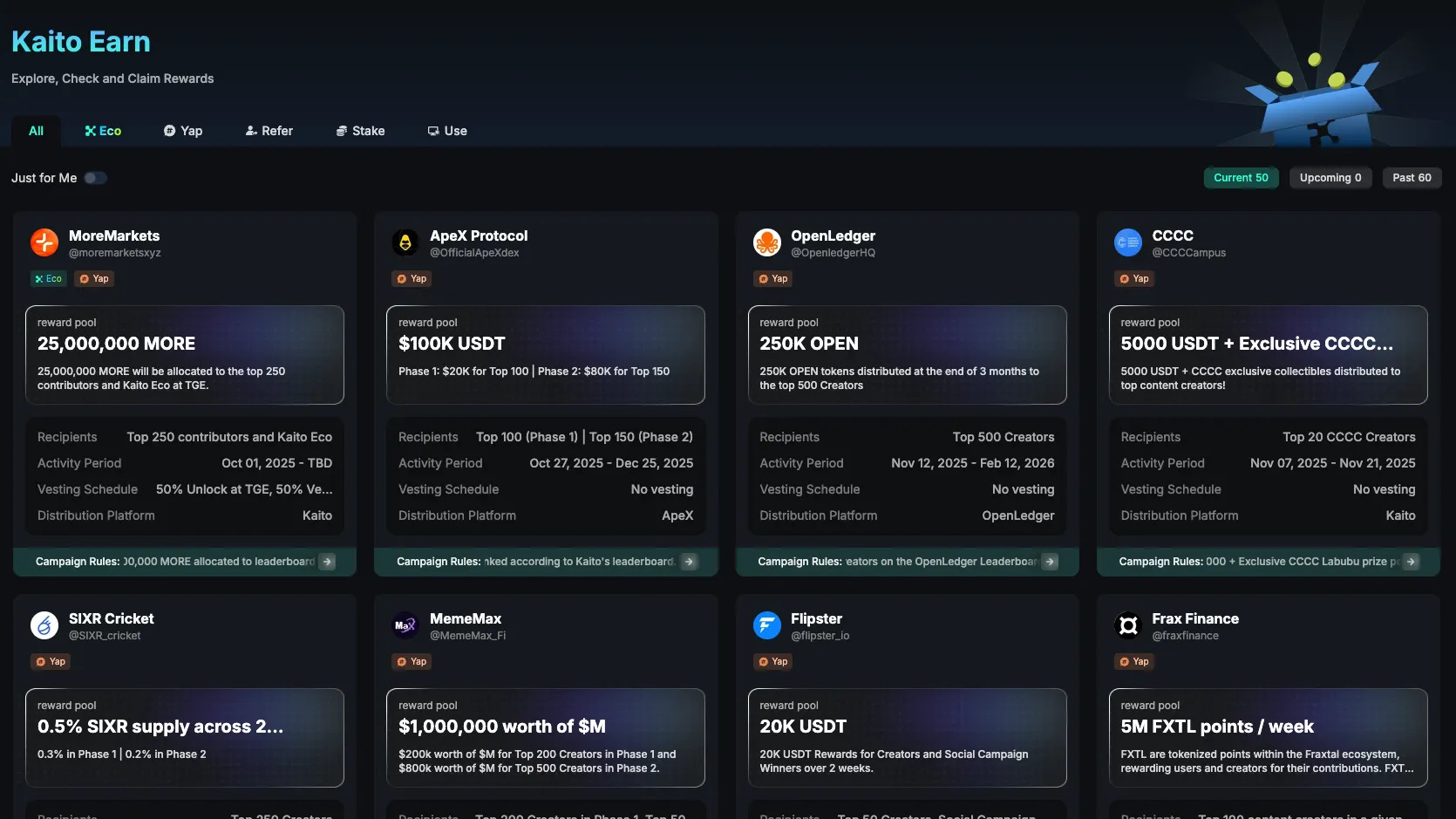
One look at Kaito Earn, where it’s basically telling you to yap about multiple projects at once.
Cookie does the same thing, where they’re just inviting others to yap for rewards, and not those who truly believe in them.
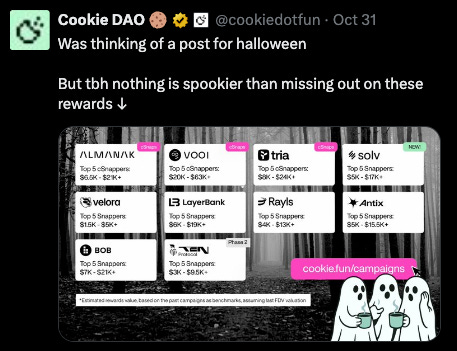
Airdrops with known criteria are boring because everyone knows how to farm them.
That’s how they become overfarmed and eventually overdiluted.
That’s why I still like retroactive airdrops the best:
No rewards are announced beforehand, so only genuine users would interact
No public criteria, which reduces mass farming
Retroactive airdrops force me to only interact with projects that I truly enjoy using (and can make profits with).
And not ones that I’m forcing myself to grind for rewards and eventually burning out.
Real, durable users get rewarded for their contributions, and they are more likely to stay because their efforts are recognised.
Airdrops are never random
User behaviours are a direct result of the incentive structure that the team designed, whether it’s intentional or not.
That’s why I’m focusing on projects that value high-quality and high-intent behaviours, instead of optimising for short-term hype.
There’s an abundance of opportunities out there in the space, with most just being noise or PvP games that are meant to extract from us.
So it’s up to us to identify the highest-ROI opportunities based on our time and capital constraints.
Judgment becomes the most valuable skill to become successful with airdrops
If you are tired of mindless grinding for airdrops, build a reputation that compounds (instead of burning out), and earn rewards just by being yourself: