
This framework saved me hundreds of hours of farming airdrops

The same cycle of failure happens over and over again for airdrops. You farm something that everyone promises will be life-changing.
You grind for weeks, clicking every button and checking in daily to avoid losing your spot on the leaderboard.
But when the allocation drops, it’s yet another peanut drop. After all that time and effort you spent, it’s all gone to waste.
I’ve experienced this multiple times after hunting airdrops since 2023, only to be disappointed by a project that others hyped up for days.
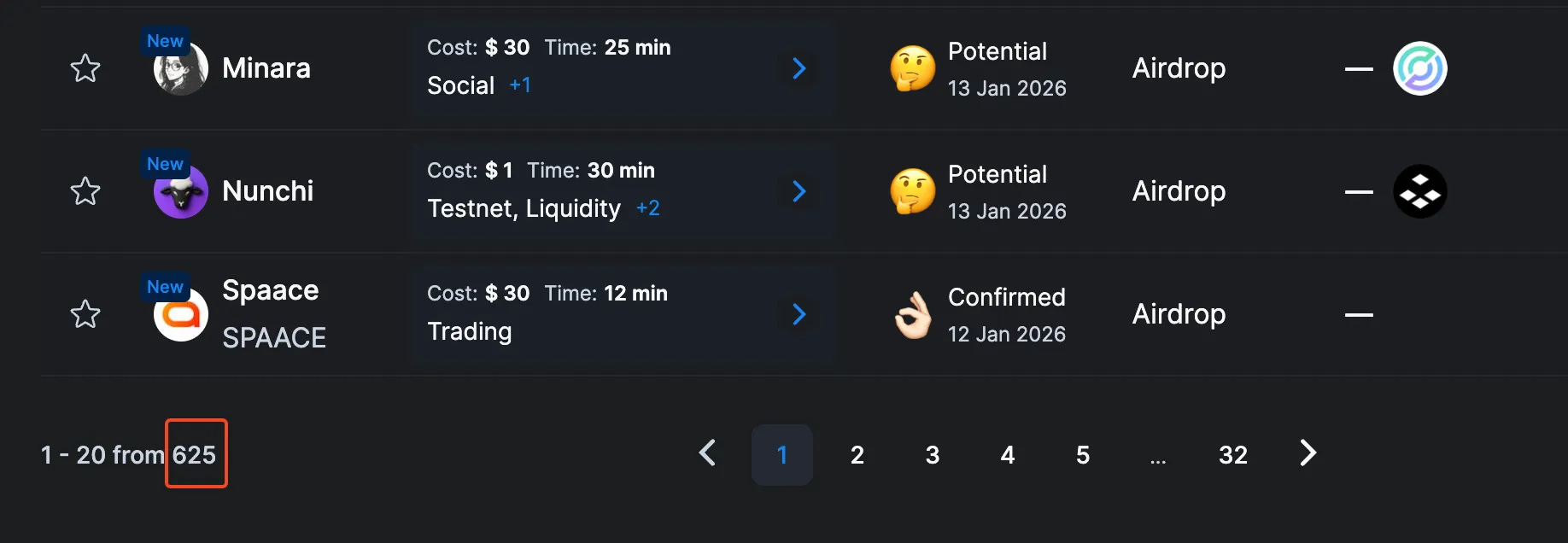
With 625+ airdrop opportunities available (as listed by CryptoRank), it’s impossible to farm every single one.
It’ll be a waste of cognitive load and time to interact with them.
Through all the airdrops I’ve both qualified and missed, I’ve developed a framework with 38+ factors to determine if a project is something I should interact with or ignore completely.
But before going through all the factors, these are the 2 buckets that every project will fall into:
The 2 types of products in crypto
In essence, every product in the crypto space can be broken down into 2 categories:
Short-term hype
Long-term sustainability
With the extractive nature of this space, many choose to go down the first route.
They prioritise vanity metrics like the number of signups or impressions that their posts get.


They launch hype-driven marketing campaigns (yapper or testnet/mainnet) voyages to get as many eyeballs as possible before the token launches.
They pair with any KOL who wants a quick paycheck and would be willing to sell out their audience for easy money.
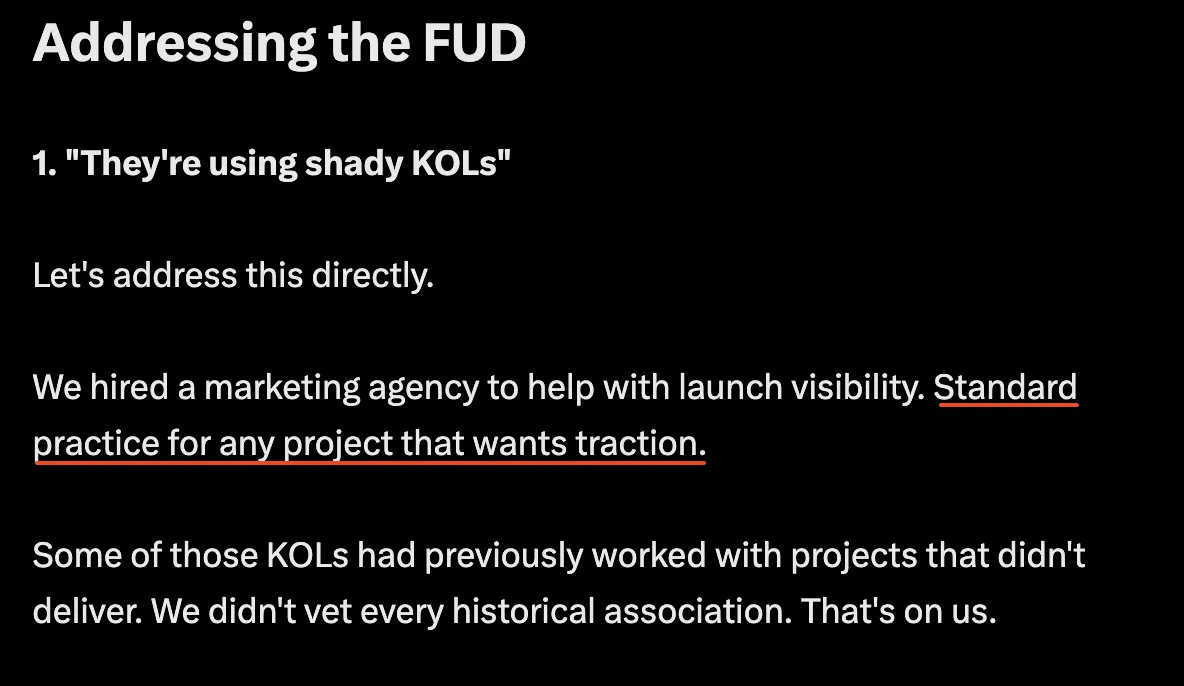
This has become ‘the norm’ with projects like Shade Network justifying that gaining traction with KOLs is ‘standard practice’.
But while these projects are the noisiest, they usually disappear after TGE.
They focus too much on the token launch (because that’s what the founders or VCs pressure them to do), until they forget about the core of their business:
The actual product they are building in the first place is meant to solve a core user problem, and not invent a problem to solve just because it’s popular now.
Something CZ said a few years back, which stuck with me:
The project should establish PMF first before launching a token.
If the project focuses too much on the token without caring about the actual product itself, it is doomed to fail.
Most projects fall in this category, and it’s up to us to stop giving them attention.
Instead, we should focus all our efforts on finding and interacting with projects that are here for the long term:
Those who are genuine builders that are looking to build something meaningful and valuable in the space.
Those who build genuine products that do not have to rely on token incentives to retain users

Those who truly care for their users and community with actions that back them up (instead of just generating hype on CT).
These projects are rare, but that doesn’t mean they don’t exist.
I’ve developed all of these factors to find signals that indicate a project is here for the long-term and is worth interacting with.
But it doesn’t mean that a project needs to hit every factor before you go all in on it.
Here are all the factors that I’ll look at (split into categories) to find these hidden gems:
Product
A project is nothing without its product, and these are the core questions I’ll ask to judge if the project is worth my attention:
What problem are they actually solving?
The first question to ask about any project is why should they even exist?
We’ve seen so many failed projects that claimed they were the next big thing, and yet underdelivered on their promises.
So many projects are just clones of the current big apps (like Aave) that offer nothing unique except for:
Being available on a new chain
Having a higher yield or lower fees
Offering a stablecoin solution for a certain use case
While others like Berachain were hyped up as a new and novel way for rewards distribution (PoL), but it has not gained traction to match the initial hype.


Another factor shared by @OnChainChemist in our Telegram chat: will the vertical the protocol is in still likely to be used in 12+ months’ time?
I was crazy over Move2Earn and Stepn in the past, but barely anyone is still playing the game right now.
If the current narrative is built on hype, then it’s likely to fade just as easily over the next months.
And in most cases, having the best tech in the world means nothing if there is no one who’s building on top of it.
The greatest example is Eclipse, which boasted 9,000 TPS on their mainnet and kept hyping up this amazing technical achievement, but the ecosystem was severely lacking.
Most of the apps built on it already existed on Solana (like Orca or Save/Solend), while the games were not fun at all.
So why would anyone bridge their funds over to this L2 and interact with it?
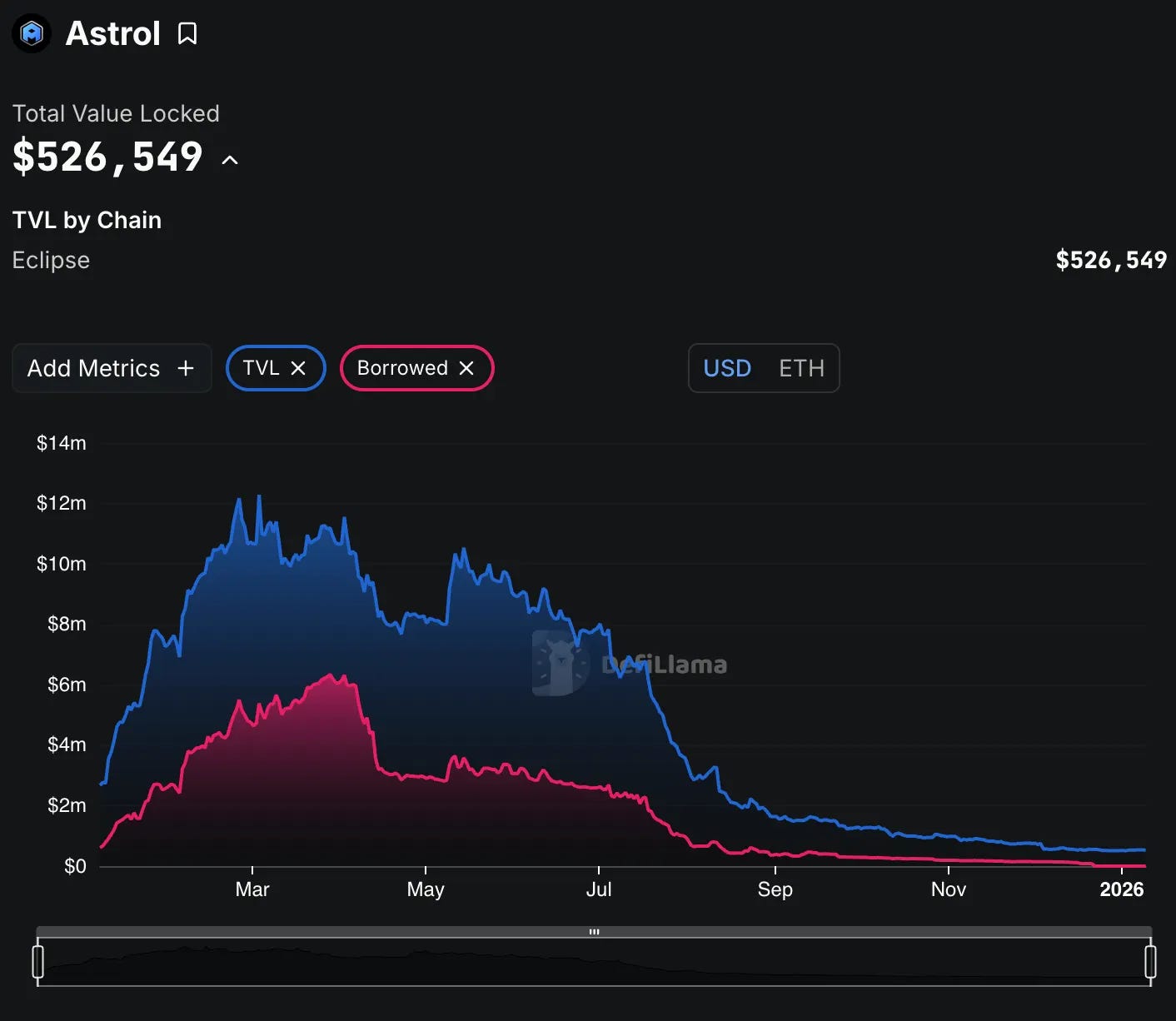
We’ve seen projects like Astrol completely lose their appeal on Eclipse, even with the promise of points, and their TVL has tanked considerably.
I’ve also made the mistake of diving into BTCFi because I thought it was an underfarmed opportunity.
But it turned out to be a massive disappointment because there was no real demand for all the ‘innovations’ that they built.
BTC chains like Merlin, B2, Bitlayer, and BOB have all faded into oblivion (and I wasted so much time on them).
For the next projects that I interact with, I will question why such a product should exist in the first place.
My verdict
Interact: Projects that either 1) solve a clear, unmet problem, 2) enable genuinely new use cases, 3) show signs of organic ecosystem growth, or 4) are in a category that will continue to have demand in the next year
Ignore: A hype-driven clone with no differentiation, or no proven user demand
Who are they comparing with?
It’s a red flag if a project constantly compares itself with a competitor.
If they keep using ‘-er’ words to position themselves, then there’s nothing special about them:
Cheaper than MetaMask
Faster than LayerZero
Better rates than Aave
Their unique proposition can’t just be about having the lowest fees:
It will be a race to the bottom as everyone continues undercutting each other until no project is sustainable.
So instead of focusing on others, projects that stand out focus on themselves.
How can they create their category of one to dominate it and completely remove any competition?
Projects that nail their positioning and branding will stay around for a longer time if there is sufficient demand for their product.
I find Succinct’s branding very quirky, and their retro-style vibe is one that stands out.


While Phantom has done a great job at creating a great user experience until it’s the most recognisable wallet on Solana.


In this new age where anyone can create anything, the only edge is how these projects make people feel. Those that can generate strong emotions will continue to stay top of mind, especially for their most loyal fans and customers.
These are good lessons for me as I build out my authentic brand instead of comparing with others.
My verdict
Interact: Projects with strong branding and a clear value proposition
Ignore: Projects that compare themselves with others using “-er” words
Will I continue using it, even without any incentives?
I was forced to use projects I hate just to claim tokens that I’d dump immediately.
I thought that if I just endured and grinded through the countless of campaigns, the rewards will be worth it in the end.
But just because a project is tokenless, it doesn’t mean I have to interact with it.
Many of them will give a poor ROI, so I want to focus on those that continue solving the problems that I have.
I remember grinding through the Linea Park campaign, spending hours on games that didn’t work just to get more LXP (which amounted to nothing significant in the Linea airdrop).


There were many of such projects that run similar grinding campaigns that became more like a job with no guaranteed return.
At least a job has a contract where your employer agrees to pay you a certain salary every month.
So here’s one more question that I’d ask myself when using the product:
Is it something that excites me, or does it drain me when interacting with it?
How I feel about using a product will guide how much time and effort I put into the airdrop.
I don’t want to waste time on those that I’m only using for the rewards.
My verdict
Interact: Products I’d happily keep using because they genuinely solve my problems
Ignore: Products I only touch for points or airdrops
And my feelings towards the project are largely determined by this factor:
What is the user experience like?
The UI and UX of a platform are clear indicators of how much effort is put into the product.
After working in a crypto startup, I’ve seen how this is usually the lowest priority during development.
The devs are more focused on shipping features because they only care that they work, rather than caring about how users would actually use them.
Designers are always in conflict because they want to do something more aesthetically pleasing, but these get shot down because it’s ‘too complex’.
So I value projects that have good UI/UX because it shows how much the team cares about their users and they want to give them the best experience possible.
I enjoy using Phantom and Rabby (but not for swapping) because of the overall experience. Especially for Rabby, the transaction simulation and displaying of signatures are extremely useful for power DeFi users.
While for DeFi apps, I like the UI for Jumper/LiFi and Hydrex.
Other apps fall on the other side of the spectrum, where they don’t care about how their products are being used, with telltale signs like:
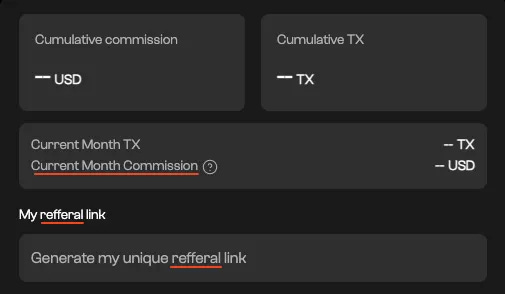
Poorly phrased terms (current month, claimed record)
Poor spelling

Some projects are a forked version of the original source code, and they look exactly the same, including Kyo Finance, Ultrasolid, and PinotFinance (on Monad).


Both do not immediately indicate that a project is a skip, but it does signal how the team does not take pride in their work, and I would prioritise these projects less.
My verdict
Interact: UI/UX is clearly designed for users
Ignore: Sloppy UI/UX with no care for usability
Core Messaging
A product can be the best in the world, but no one will know about it if the marketing is bad.
Marketing is important in getting the word out, and how the project promotes itself tells a lot about its goals:
How are they using AI to generate their marketing collaterals?
I would look at how the team markets the product on platforms like:
Twitter and other social media
Landing page
Documentation
I become skeptical of the product if their messaging leans heavily into AI-generated content:
It shows that they don’t have any unique positioning and can only communicate their value with ‘baseline’ content.
I shared how to spot signs of AI slop here.
I’m not saying that using AI-generated content is completely bad, but it says a lot about the care a team has for the project.
And it’s very likely that these projects will completely disappear after TGE because they’re just riding on the hype.
I saw this post by UXLINK, which has all the telltale signs of a post that was fully AI-generated.


We can see similar patterns in the project’s landing page,

or even their documentation.
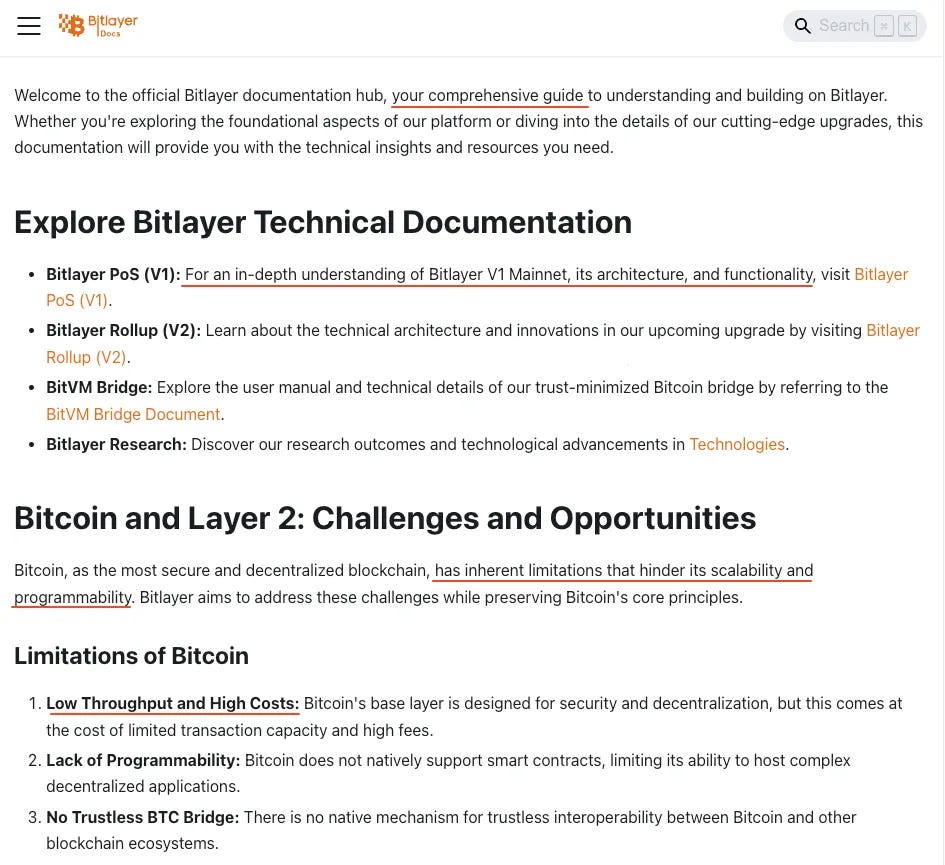
AI-generated content hints that the project has no original thinking, and they’re just here to ride the hype of whatever narrative is hot now (not saying it’s always true, but I’ll be more skeptical).
My verdict
Interact: Messaging is authentic and intentional
Ignore: Marketing is predominantly AI-generated content that is focused on hype
How is the project using ragebait?
We can tell when a project wants attention at all costs.
The algo loves ragebait, and some projects lean too much into it to get eyeballs.


If the project aims for short-term virality, they could lose trust in the process by making oversensationalised claims, or dunking on other projects just to make them look better.
And in most cases, these projects become irrelevant once the fad is gone.
I would avoid projects that focus on marketing gimmicks, rather than communicating their true value proposition.
My verdict
Interact: Projects that communicate their value
Ignore: Projects relying on ragebait for short-term attention
How are they talking about their token?
There are projects that constantly deny the existence of a token, until they announce it.
Then there are projects who find every opportunity to shill their token pre-TGE, even when nothing is confirmed yet.


And of course, there’s Base, who constantly denied a token before switching gears completely and uses vague words like ‘exploring a token’.

The frequency of token mentions in the project’s marketing is a factor that I’d consider as well.
If the project constantly shills their token, it will encourage farming (even if it wasn’t their intention).
For projects like Miden, it’s so boring because now you know:
A token will launch
How much supply is allocated to rewards and the airdrop

The masses like certainty, and the campaign becomes too overdiluted and it’s harder to stand out.
So these are ones I’ll put less effort in.
While these are rarer today, I like it when there’s nothing confirmed about the token.
It’s definitely a risk that we’re taking because an airdrop may never come.
But if it’s something I enjoy using (and will continue using even without any incentives):
The airdrop becomes a bonus.
Even if they don’t do an airdrop, I’d still be happy with the product itself.
And when they do airdrop, it will be a nice win especially if they didn’t attract farmers.
I would continue using the Jumper-Relay route that hits 2 tokenless protocols while getting fast and cheap bridges to most chains.
My verdict
Interact: Projects that focus on messaging for the product
Ignore: Constant token shilling even before it TGEs
When do they plan to launch their token?
Of course, we all want the project to launch its token ASAP so we can dump it and move on to the next project to farm.
Projects know this too, and some would be pressured to TGE when market conditions are ‘good’ or when they feel like it’s the best time (when attention on them is at an ATH).
But as we’ve seen countless times, what’s the rush to launch a token? Most are at all-time lows right now, as everyone has dumped them without mercy.
The ‘community’ gets angry and starts hurling profanities at the project if they take more than a year from mainnet to TGE.
While in Web2, it could take years before an IPO launches. It’s only when the product finds PMF and has a sustainable revenue stream that the company considers going public.

The recent airdrop that dumbfounded me was aPriori, an LST for Monad that launched on BSC and Ethereum weeks before the Monad mainnet.


What’s even the rush to launch this token, except to commit crimes like this?


The same incident happened for Trove, where they launched an ICO for their token even before their mainnet launch, using testnet metrics as a gauge of their traction.

If the token launch happens too early in the project’s lifecycle, I would be more wary. I believe that TGE-ing 2 years after mainnet is quite early still, but that’s what only a few projects have done.
My verdict
Interact: Token launch happens after PMF is established
Ignore: Token launch is rushed, especially based on testnet metrics
How organic is their follower growth?
Follower count is a bad signal as a raw metric because it can be easily gamed.
A project with hundreds of thousands of followers means nothing, especially if the impressions on their posts don’t reach 1% of their follower count.
We can look at the ‘amazing’ engagement stats that Magic Newton received during the highs of their InfoFi campaign,

while no one cares about them anymore now.
I won’t trust accounts with abnormally high follower counts, by using these 2 factors:
The baseline followers of the top projects in that niche (e.g. 300+k for Hyperliquid/Aster, 600k for Aave)
The age of the project since launch
If a project just launched and has 30k followers or more, I would take it as a botted account.
Some accounts like UXLINK have a crazy amount of followers (they used to have 1 million), and they are obviously pumping up the metrics too
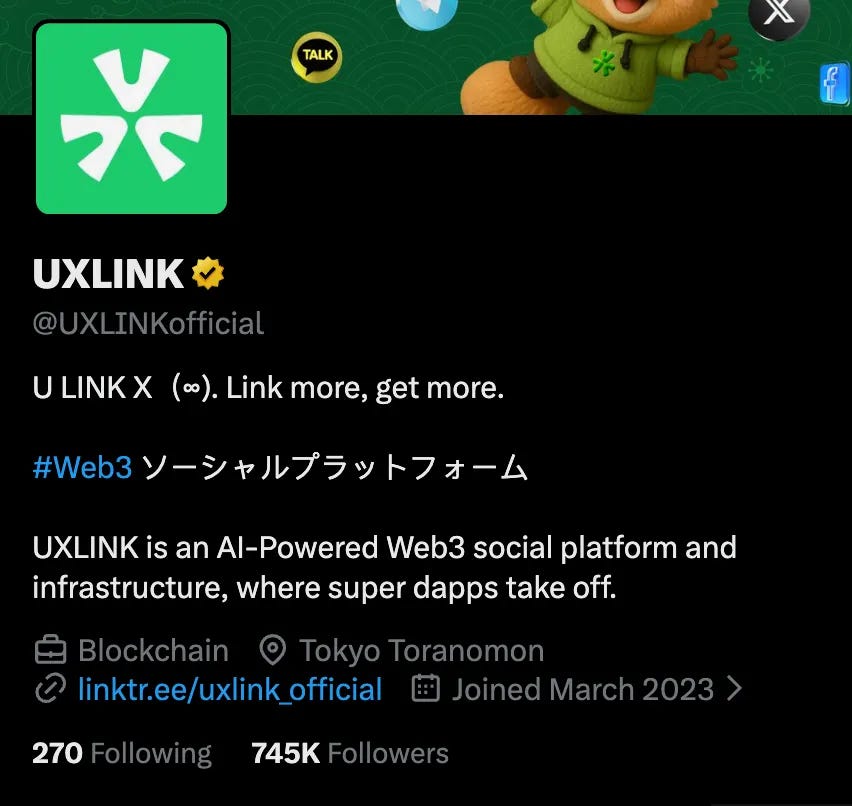
Projects that optimise for high followers want to build credibility with high numbers. But those numbers mean nothing if all of them are bots instead of real humans.
I have nothing against them, but such projects would tend to favour short-term hype over long-term sustainability.
My verdict
Interact: Growth in followers feels organic
Ignore: Follower counts are obviously inflated or botted
Who backs the project?
Fundraising rounds used to be the main alpha for airdrops, where a bigger round usually indicated more firepower for the airdrop.
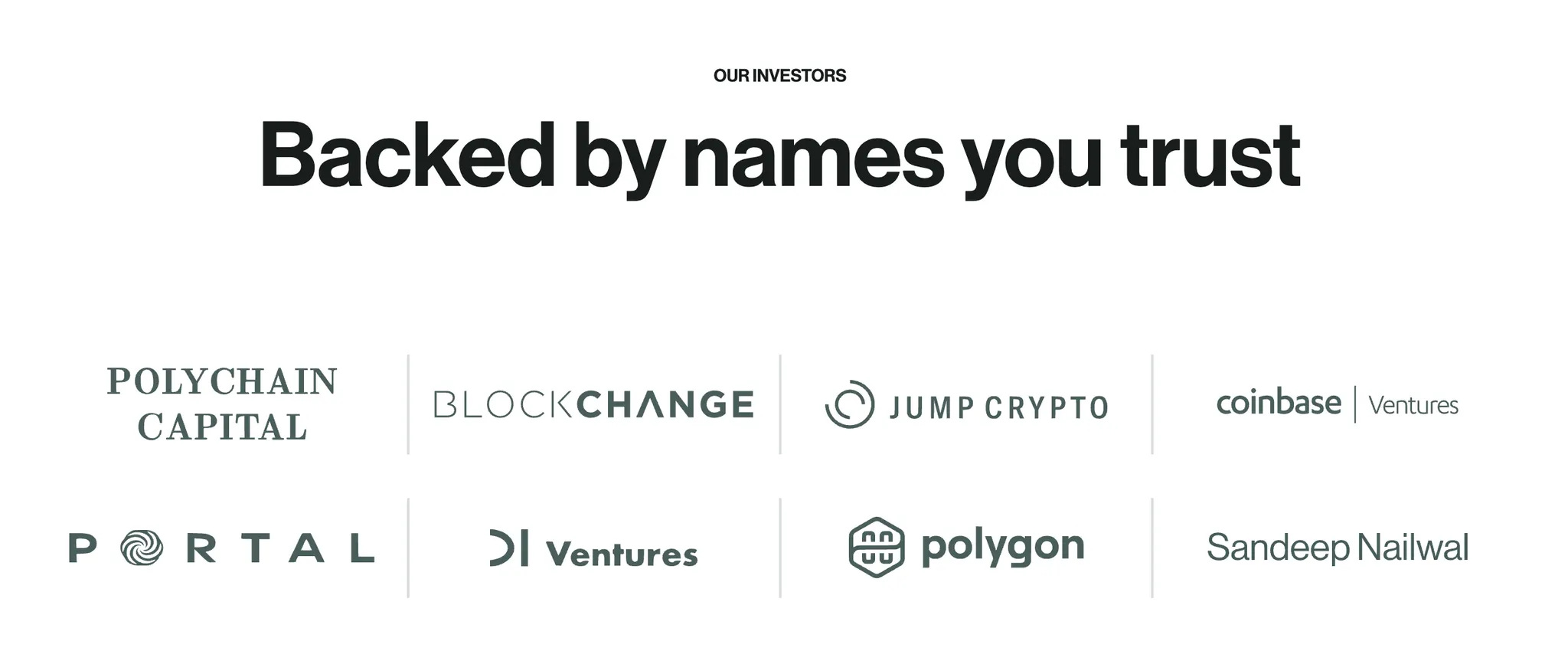
But that meta is gone, and fundraising amounts barely matter anymore.
Though I still find them useful as by association, the reputation of the fund will naturally extend to the projects they back.
I’ll associate any new YZi Labs-backed project as those with shady tokenomics and poor UI, based on the previous YZi Labs-backed projects I interacted with.
Some projects choose to rest on these laurels and use ‘we’re backed by so and so’ as a reason for us to interact with them.
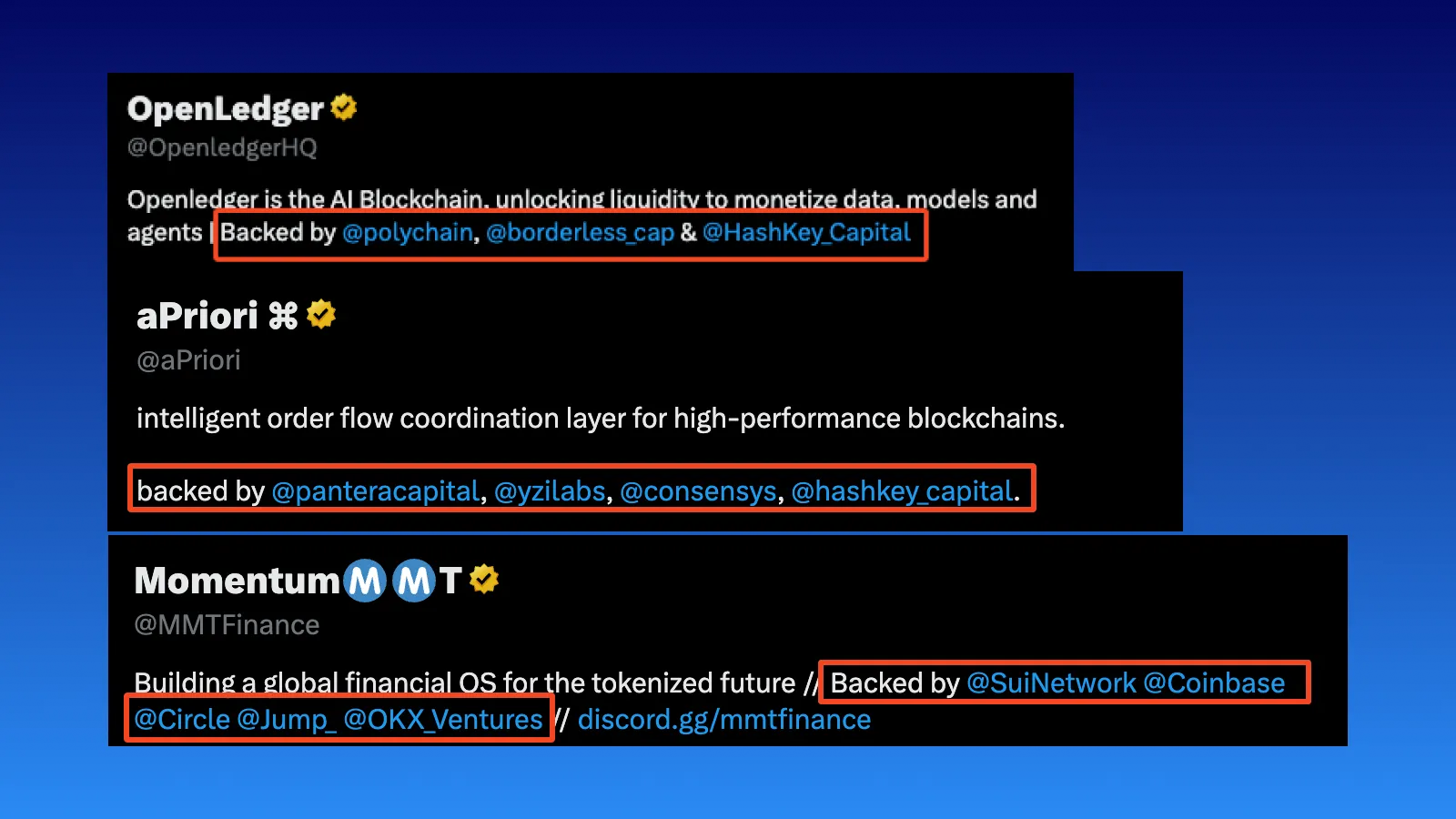
If they don’t have any other unique value proposition (because everything else is the same as other projects), then I won’t be convinced just because they are funded by someone big.
But VCs are not the best indicator of success, because they can get it wrong too.


So I take these fundings with a pinch of salt, while looking to stay away from YZi Labs-backed projects.
My verdict
Interact: Backing from aligned funds, I would pay most attention to a16z
Ignore: Funding by YZi Labs, or projects that use their backers as the main credibility signal
How frequent are their updates?
The lack of communication from the account could be signs of a slow rug.
Satori Finance is a textbook example of a project that was built to ride on the hype of L2s but lost its relevance once Hyperliquid and other perp DEXes started to dominate.
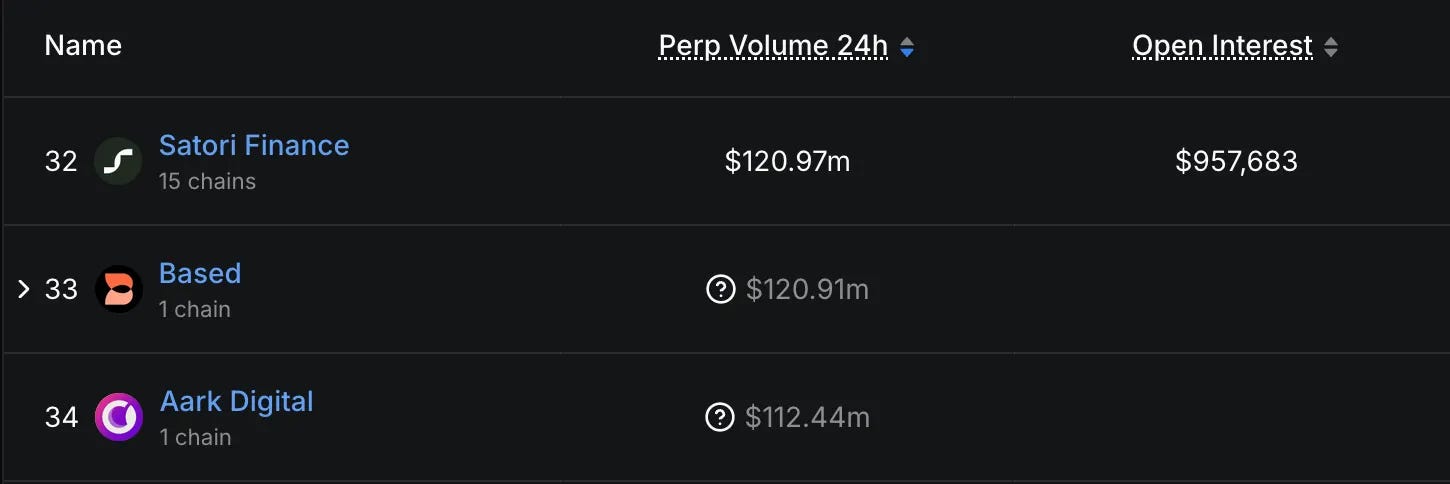
They have been talking about a token since Nov 2024,

and Feb 2025,
but no news of the token even after a year.
The frequency of core product updates is a sign of the project’s health. Some updates like new token listings are the bare minimum for any perp DEX, and I wouldn’t count those.
I would want to see more features being added (especially based on their community’s feedback) to show that they’re continuously working on their product.
Or when they’re more transparent in their communication, even sharing their failures.

Otherwise, we’ll see more projects that continuously tweet to give the illusion that everything’s fine (like levelUSD), until they drop a bomb that they’re closing down or ‘getting acquired’.


A good indicator would be to check the project’s blog, with some barely providing any updates in months.
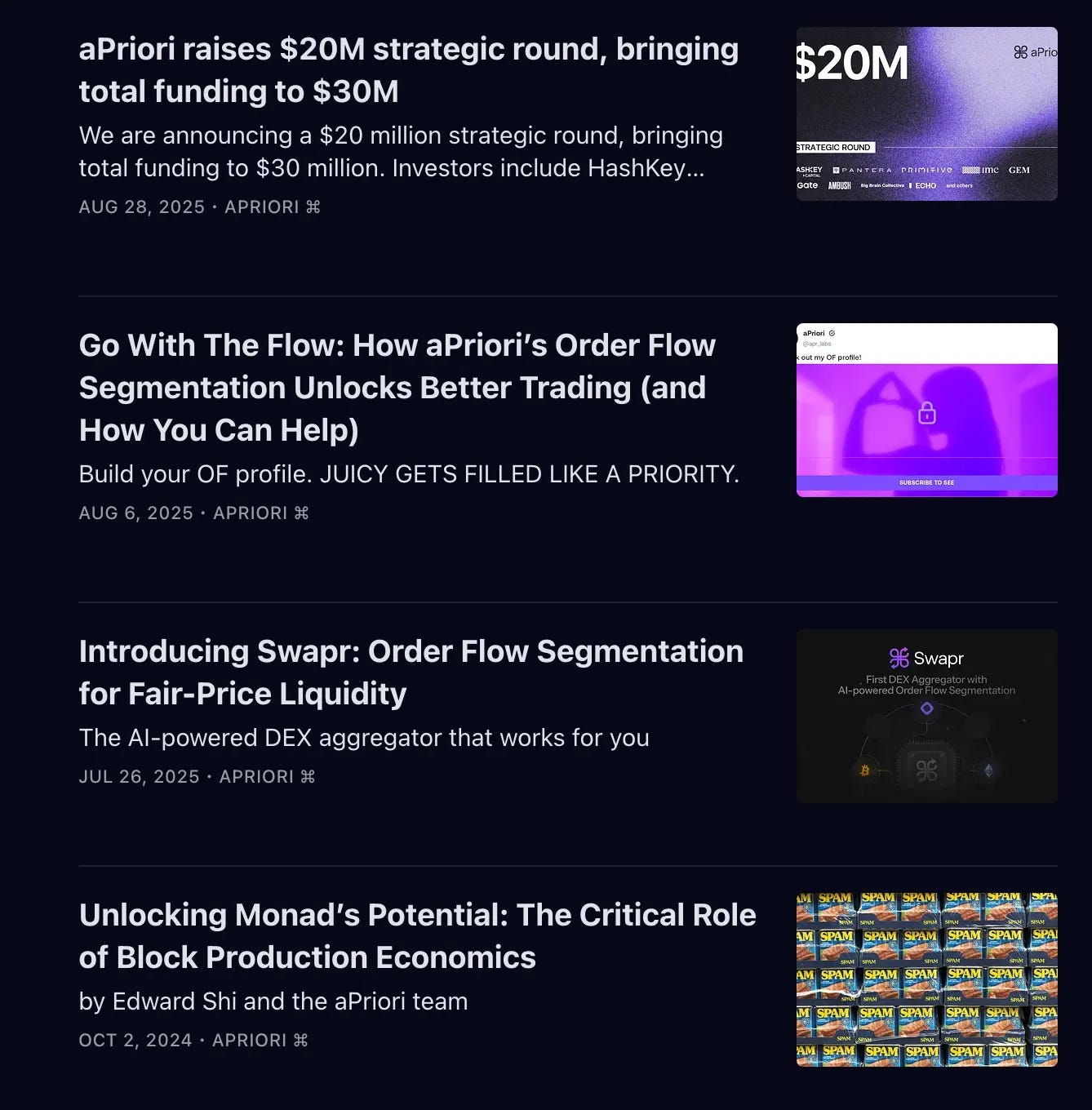
I use a benchmark of at least 1 quality blog post a month, like what Succinct has been doing, even after launching their token (which indicates they are here for the long run).
Once a project stops giving out meaningful updates, I will start to be more concerned.
My verdict
Interact: Consistent and meaningful product updates with transparent communication
Ignore: Updates are infrequent
How often are they pivoting?
Pivoting is part and parcel for a product to eventually find market fit, especially if their original thesis didn’t play through.
But I’ll start to be concerned if the project has pivoted and is still unable to achieve success.
One such example was Nuffle Labs, which spun out of NEAR to improve on NEAR DA and their fast finality layer.
But they shifted towards an integrated liquidity marketplace where you could earn yield on any token.


Again, they realised that there’s a mismatch in the demand for lending and borrowing altcoins (many wanted to lend for yield, but no one wants to borrow them)
It is worrying if a project continues to pivot, especially when they’re trying to take advantage of every hyped narrative and rebrands to ‘stay relevant’.
I like projects that focus on one core offering and continue to improve on it, rather than having shiny object syndrome and riding on the next hype train.
My verdict
Ignore: Project repeatedly pivots to chase new narratives, but cannot get traction
How do they handle crises?
I’ve seen this happen all the time, where a project seems to be doing fine, until a crisis hits like a hack or drain, and we never hear from them again.


Meanwhile, other projects have a reputation to uphold, including Trust Wallet or the old Galxe hack, so they would do their best to compensate any affected users.
I won’t want to wait for something bad to happen, only to discover that the project I’ve placed funds in becomes radio silent.
Ones who truly care about their community would do their best to reassure users and aim to get funds back as soon as possible.
In times like this, I would question their communications:
Are they transparent, or do they leave a lot of questions unanswered instead?
My verdict
Interact: If the team is clear and accountable with their communications
Ignore: Ones that go silent during a crisis
Some would use vague phrasing to leave a lot of ambiguity, so they don’t have to uphold whatever they say:
Do they keep to their promises?
A project can say whatever it wants, but it’s meaningless until it actually does what it said it would do.
We’ve seen projects that underdeliver on all the promises, or go back on their word by changing the rules of campaigns or other conditions:
Mitosis had so much drama because of the constant delays over their TGE

Humanity Protocol claimed to run the first ‘fair’ drop where tokens only go to real humans, only for the allocations to be so ambiguous such that it favoured insiders more.


And we’ve also had the infamous tweet by Sandeep to generate interest in Polygon zkEVM by hinting at an airdrop.


(The L2 is shutting down soon because no one is using it).
There are too many of these incidents to keep track, but I would be cautious of those projects that are more hype-focused rather than trying to build something genuinely useful.
My verdict
Interact: The team consistently delivers on what they claim they will do
Ignore: Underdeliver or go back on their promises
Founder and team members
Since product and marketing are all commoditised, the only true moat that a project has is its team.
The team has a vision and will shape the product based on their unique worldview.
And that’s why I see @Ikh011’s conviction to be more important than ever:
Bet on good founders and teams.

We can tell how successful a project can be, based on the team behind it.
I would trust those with a credible reputation more than those with a questionable past with histories of rugs and other shady businesses.


These are some of the factors I look for:
How enthusiastic are they about their own product?
The team’s and the founder’s authenticity can be seen through their posts on CT.
How cool would it have been to see like the vlog of Amazon in 1996, right? How sick would that have been? And like every day he’s like, ‘Yep, almost lost the company today.’ Like 6 months later, ‘Almost lost the company again.’ I thought that would have been awesome. Alex Hormozi
Anyone can build anything now through vibe coding and AI, so what matters most is the connection they have with their target audience.
I’d like to see genuine energy from the team, as it shows that they have conviction in what they’re building, rather than trying to ride on the latest trend.
We can see this through @larrettgee’s thoughts on how Hydrex fits into the ICM narrative.


I like it when founders publicly share their thoughts online, as they give a behind the scenes indicator of why they’re even building the product.
While for other teams (like those who run InfoFi campaigns), it’s obvious that their posts are more about hype than substance to attract ‘yappers’ to engage with and boost ‘mindshare’ for their product.
While all the content has a cringe factor.


With tons of AI-generated slop appearing in their posts.
Ironically, the more the team talks about wanting to build for the community, the less they would actually reward them.
The quality of content that the founder and team both share online gives us hints on the type of product they’re building.
My verdict
Interact: The team shows genuine conviction in their project
Ignore: The content is full of hype or optimised for engagement farming
How does the team talk about the token?
Some of teams can’t publicly confirm or deny the existence of a token, which is why they choose to ignore such conversations before anything is confirmed.

While others keep talking about it, possibly to farm engagement as well.


Some like to say how they want to do a distribution that’s right for their users,

but that leads to even higher expectations and a massive disappointment after TGE.
Just like the brand account, I prefer team members and founders who do not publicly share anything about the token until the details are confirmed.
But before that, it just leads to more hype and speculation (because the token is more or less confirmed), which encourages even more farming and dilution.
My verdict
Interact: The team doesn’t talk about the token at all
Ignore: The team makes the token part of their content strategy to generate hype
What is the vibe of the founder?
The entire project’s culture is highly dependent on its founder. As the biggest role model, they will set how others perceive the project, based on their behaviour online.
Here are some examples of founders that I’d avoid:
Founders who farm engagement
Limitless was a textbook example of how the founder farmed engagement to get attention for their product, but without any substance.

He was constantly shilling the LMTS token before it was launched, which is a major red flag for me (especially with how the token performed eventually).

There’s a trend for projects that run a yapper leaderboard:
Their founders will milk engagement from their ‘community’ through daily hype posts. But once the campaign and TGE are over, their account becomes a ghost town.
We’ve seen the same pattern across these founders:
Jason Zhao (Story)
Terence Kwok (Humanity)
Shreedhar Shreenivasa (Novastro)
Sean Li (Magic Newton)
Ironically, Shreedhar tried to ‘clear his name’, but it’s been radio silence since Nov 1.

I would stay away from founders who can’t explain their value proposition clearly, and would need to resort to hype and vague terms to describe their product instead.

Founders who associate themselves with questionable reputations
This was a concept that I learned from @calebralston, where brand is determined by the deliberate associations you pair yourself with.
If a founder goes on a podcast or partners with someone with a questionable reputation, that reputation passes on to him by association.


They would also try to associate themselves with ‘credible’ platforms like Messari, and we need to question ourselves if this association is:
Earned through the merit of the project (it is genuinely novel and interesting)
Bought through sponsorships or paid shills


The reputation of a founder is highly dependent on who they associate themselves with, and I’d be cautious of those who prefer attention at all costs (rather than those who are protective of who they publicly mix with).
Founders who are arrogant
We’ve also seen the downfall of arrogant founders like Do Kwon, to those who fade into obscurity like Charles Hoskinson.
While others continue to dunk on their competitors at every moment.


Which is something I regret not looking into further before I invested in Aerodrome.
Their traction is great, but I don’t like the constant comparisons with Uniswap when you could just focus on your own product.
If the founder is genuine and likeable (without eventually turning into a scammer), there’s a good chance that they would truly care for the community and do a good airdrop.

So I’d be cautious if the founder is not doxxed, or they are not that active on CT.
Yes, it’s definitely hard for founders to both build and post. But I would trust projects more if they’re building a product that aligns with my values.
My verdict
Interact: Genuine founders who clearly communicate their vision
Ignore: Those who chase clout or associate themselves with questionable reputations
Onchain metrics
I hate numbers, and have not been using onchain metrics to guide my assessment of projects.
But these are one of the biggest indicators of the project’s success, especially with everything being available onchain.
Of course, the metrics can be manipulated to make the project look successful, so we can’t just look at one indicator in isolation.
I watched through @patfscott’s DefiLlama guide for onchain metrics (a highly recommended watch), and narrowed down these 2 metrics to consider:
Liquidity: amount of ‘fuel’ in the ecosystem (TVL, open interest)
Activity: How liquidity is being utilised (volume, fees, revenue, earnings)
In the perp DEX wars, we’ve seen how trading volume was used as the key metric to compare the success of other perps vs Hyperliquid.

But it doesn’t tell the full story, since volume can be overly inflated because users are opening and closing their positions in minutes to boost their volume for an airdrop.
While open interest is a better indicator of ‘skin in the game’. Users leave their positions open and are risking liquidation and paying funding fees, which shows that the market has depth and traders are actually using the platform instead of farming the protocol.
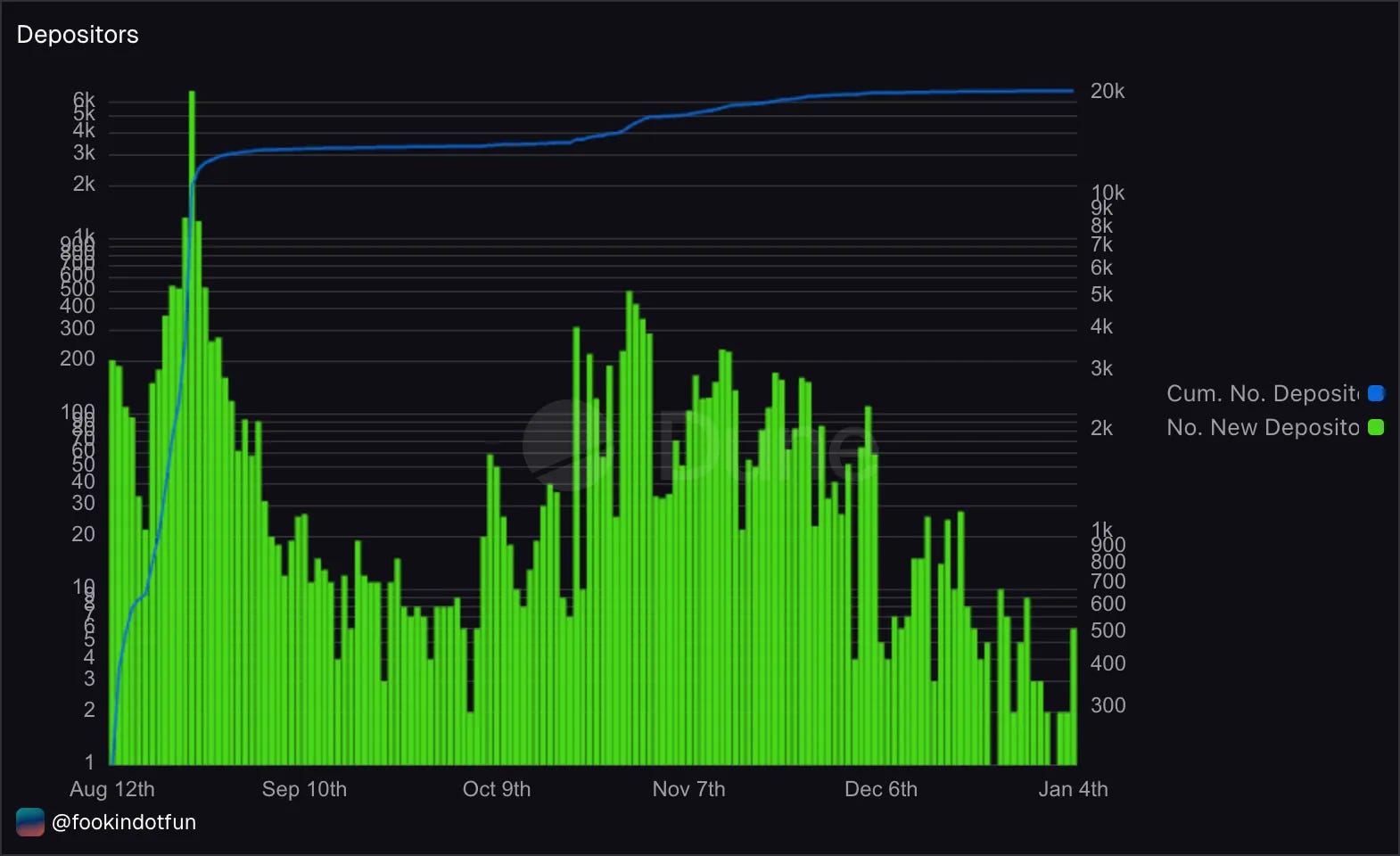
Another example would be footballdotfun, where we can see that revenue (activity) is consistently increasing (though it has started to slow down).
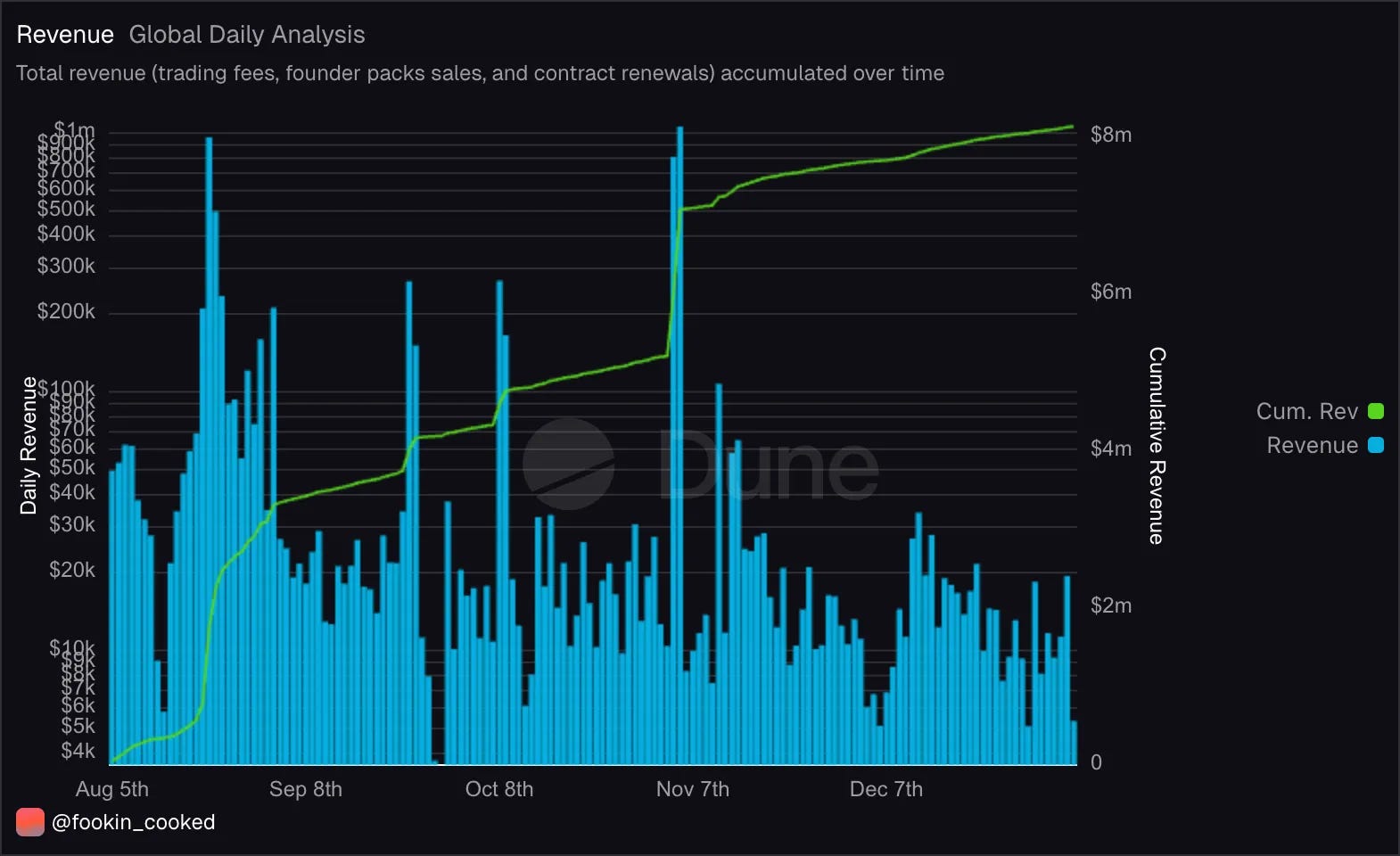
I’m more concerned because the number of new depositors per day is very low (liquidity) at less than 20/day, which could suggest that the platform is excellent at retaining users, but struggles to get new players.
These are other metrics that I’ll pay attention to when evaluating a protocol’s onchain metrics:
Growth (how does the project slowly capture market share?)
Consistency (short-term spikes are less valuable than steady growth in months)
Recent Listings for chains (highlights developer interest in building on the new L1/L2)
I would prioritise protocols that generate revenue and the liquidity/activity metrics should gradually improve in the weeks after launch.
I would avoid projects that focus on these metrics:
Monthly active users (these can be gamed and revenue is the more important metric)


Testnet volume (there’s no skin in the game, so testnet volume is not indicative of how the protocol would perform on the mainnet when real money is involved)
My verdict
Interact: Liquidity and activity grow steadily with real revenue
Ignore: Inflated or inconsistent metrics with short-term boosts that fail to sustain the initial hype
Community
The type of individuals that the project attracts says a lot about the community they are looking to build.
Which KOLs are promoting them?
This is subjective, because both you and I have differing opinions on who has a reputable account and who should not be trusted.
In particular, I’ll be wary of those who:
Previously associated themselves with known scam projects
Are constantly changing their affiliate badge (which gives an indication that they’re willing to promote anything that pays them).
Looking through the list of Trove affiliates, I remember some of them who used to be Polymarket affiliates (too bad we can’t track the history of their affiliations).


If the only KOLs that are promoting them have shady pasts, then I’d be more cautious when those accounts that I hold in high regard are not talking about them at all.
I plan to write out another full framework on how to spot KOLs worth muting, but I would treat everything as a paid ad unless proven otherwise.
My verdict
Interact: Accounts that promote them have a credible track record and long-term alignment
Ignore: Promotion comes from a serial shiller or ones who change their affiliate badges
How is the project being promoted?
While we covered who’s promoting the project, a lot can be determined by how the project is being promoted, even by credible accounts.
I would look at the style and tone tell if it’s a paid shill, or if the account genuinely believes in the project.
I’m looking for balanced reviews instead of posts that are filled with hype words that have no substance, like:
Calling the next big project in a certain category (the next Zcash, Hyperliquid etc.)
Vague descriptors of why they are bullish (fundamentals look good on this one, I have a good feeling about this)
Sucking up to the team (I’ve met with the team, and they’re all chads)
Pushing blame to the market as an insurance (Ultimately, it’s up to the market to decide)
The skill of identifying a paid ad will help us filter out so many opportunities that we should skip.
My verdict
Interact: Promotions feel balanced
Ignore: Messaging is exaggerated or filled with hype words
Which credible accounts are vouching for them?
This is an interesting factor that may not have a significant impact on the airdrop itself, mainly because of how these credible accounts care more about the tech than the token.
We’ve seen how Vitalik vouched for both Brevis,


and Taiko,

but both turned out to be underwhelming airdrops.
Airdrop accounts would shove this endorsement down your throats for engagement. ‘Vitalik likes this project, so you MUST interact with it.’
I would not increase my expectations just because someone credible likes the project.
In particular, I found both projects taking the farming route with endless Galxe tasks (Taiko) and Brevis (yapper leaderboard), which led to high expectations and massive disappointment afterwards.
My verdict
Ignore: Credibility is used as a factor to farm engagement
How genuine are their interactions on socials?
One look at the comments, and we can tell if there are genuine users who are fans of the product, or if it’s just an army of AI bots to bump engagement.
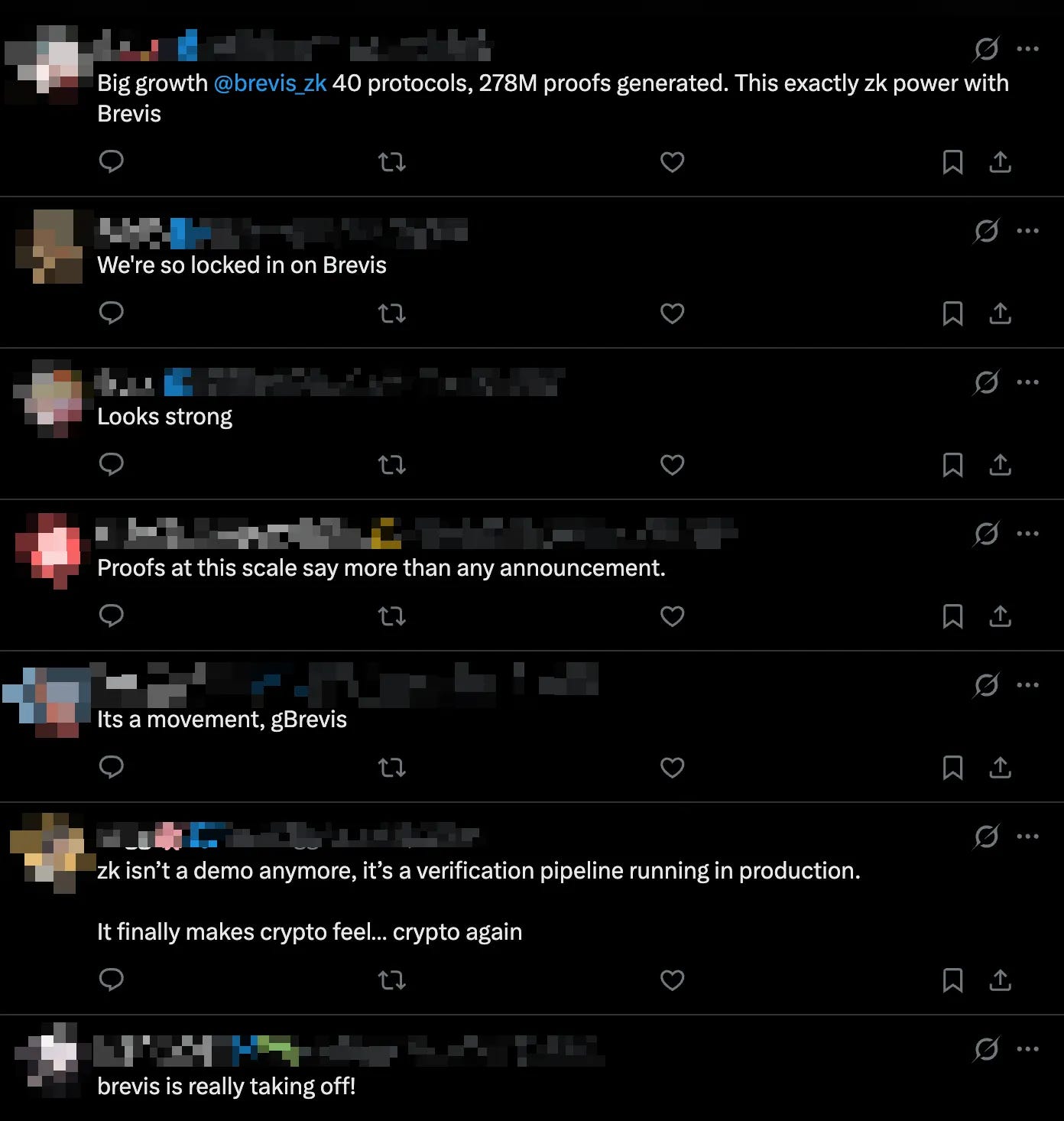
If every comment comes from accounts you’ve barely seen before and are all bootlicking the project, there’s a high chance it’s all just AI slop.
These are not new, as projects have been using bots long before ChatGPT became a thing.
And if they run an InfoFi campaign, the engagement numbers will be boosted, sometimes to a ridiculous extent.


The same thing would happen on Discord too, where trivial conversations happen just to ‘level up’, with no discussions about the project.
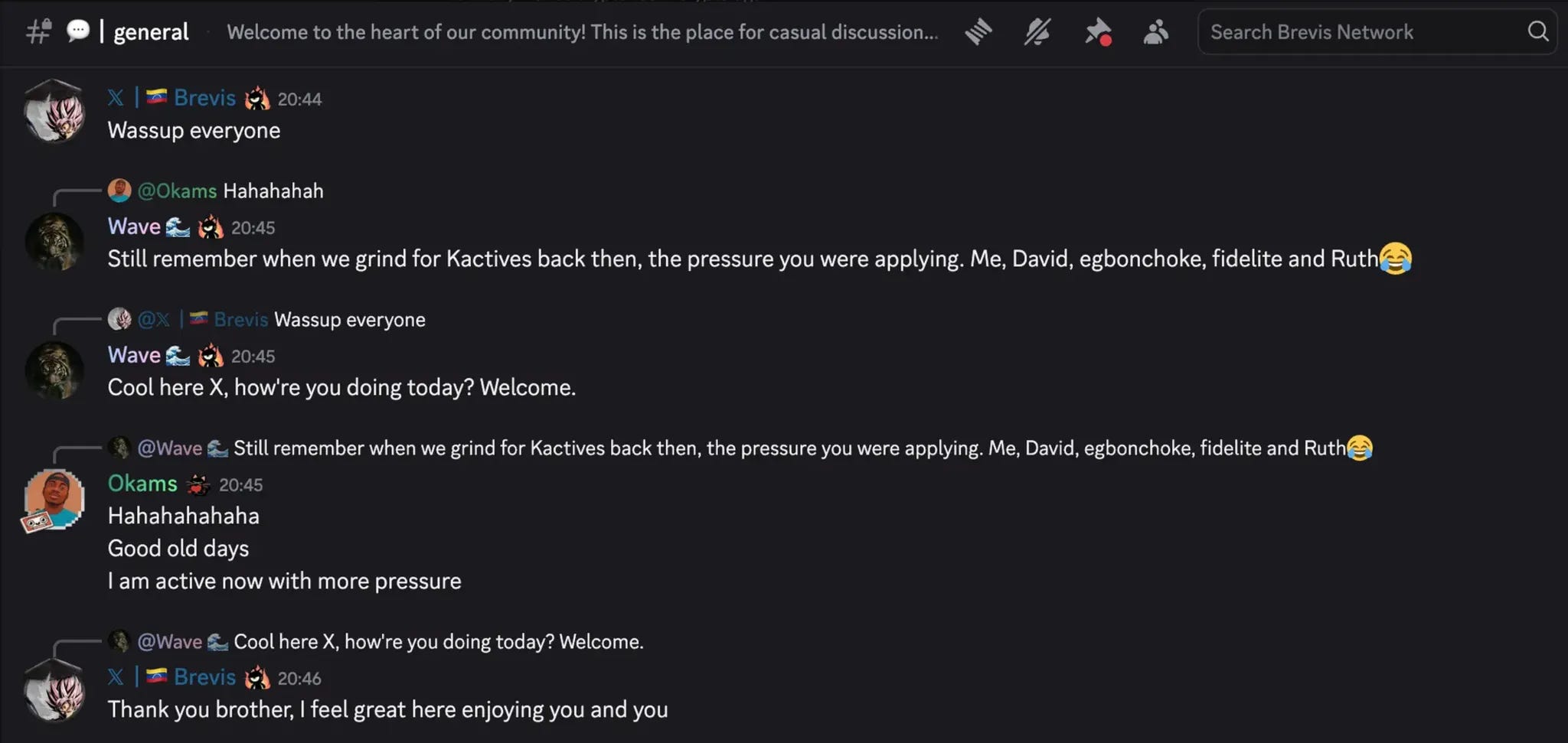
I would trust a project less if all of the interactions are clearly botted, with no genuine accounts who are interacting with these posts.
Some projects are desperate for attention, and would use their ‘community’ to spread the word for them.
My verdict
Interact: Real users engage with the posts and share authentic thoughts
Ignore: Posts are overly inflated due to InfoFi activity
How genuine is their Discord activity?
I would go through all the channels of the project’s Discord server to answer these questions:
How active are the team members there?
How frequently do the mods respond to genuine queries about the project?
What kind of answers are the mods giving to questions about the project?
If they’re giving generic placeholder responses, it’s not a good sign.
My verdict
Interact: Team and mods are actively engaging in the server
Ignore: Shallow conversations with generic replies
How the mods and team interact with the users in the server would give an indication of the care they have for a project, just like this factor:
How good is their support?
This is something that many projects take lightly, but it affects the overall impression I have of them.
When things go wrong, how the support team handles the queries shows the care the project has.
Some teams can’t be bothered and would hire anyone to fill the support role without any quality checks.
In most of the situations where I had to contact their support for help, it’s been a bad experience that leads me frustrated.
I’m not sure if it’s too much to ask for the same service standards as Web2 companies:
Most of them provide almost instant responses and are relatively polite, while that can’t be said for Web3 projects:
Responses can take hours (until I forget to check the Discord server), and the tone can be condescending, where you feel like a fool when asking for help.


Though one of the positive experiences I had was with Zerion, where the customer support was helping me with my query in a fast and respectful manner (even on a weekend).
How I feel after asking for help (based on the quality of support) helps me determine how much the project truly cares about its community.
My verdict
Interact: The support team is respectful and responsive
Ignore: The support team is condescending and takes forever to respond
Incentives
The type of actions a project rewards tells a lot about the metrics it optimises for.
What kind of actions are they rewarding?
We can go on and on about what the project would do to give the best airdrop, but it all boils down to:
What actions do they value the most
How diluted these actions are
In cases where not many wallets perform high-value actions:
A smaller number of wallets would get a disproportionately higher number of tokens.
But it also leads to a divide between the haves and have-nots (and drama happens yet again on CT).
Some projects prefer to reward quantity over quality, and these are usually the ones that are looking to farm you.
They have no confidence in their product, and think that there will only be users if there’s a hint of an airdrop.
These projects would run campaigns like these to attract as much participation as possible:
Point programs with no cap or end date, such that points become overdiluted (e.g. MarginFi)
Voyage/Road to TGE campaigns with easy tasks that can be done by millions of wallets (especially testnet ones)
I used to think that campaigns were the easiest way to get airdrops, but that edge is slowly gone.
Because these actions can be replicated easily by many other wallets, it no longer makes sense to expect a big airdrop unless there’s some barrier to entry.
Galxe quests like Linea Voyage no longer work because they attracted millions of wallets, which shows how diluted that campaign was.
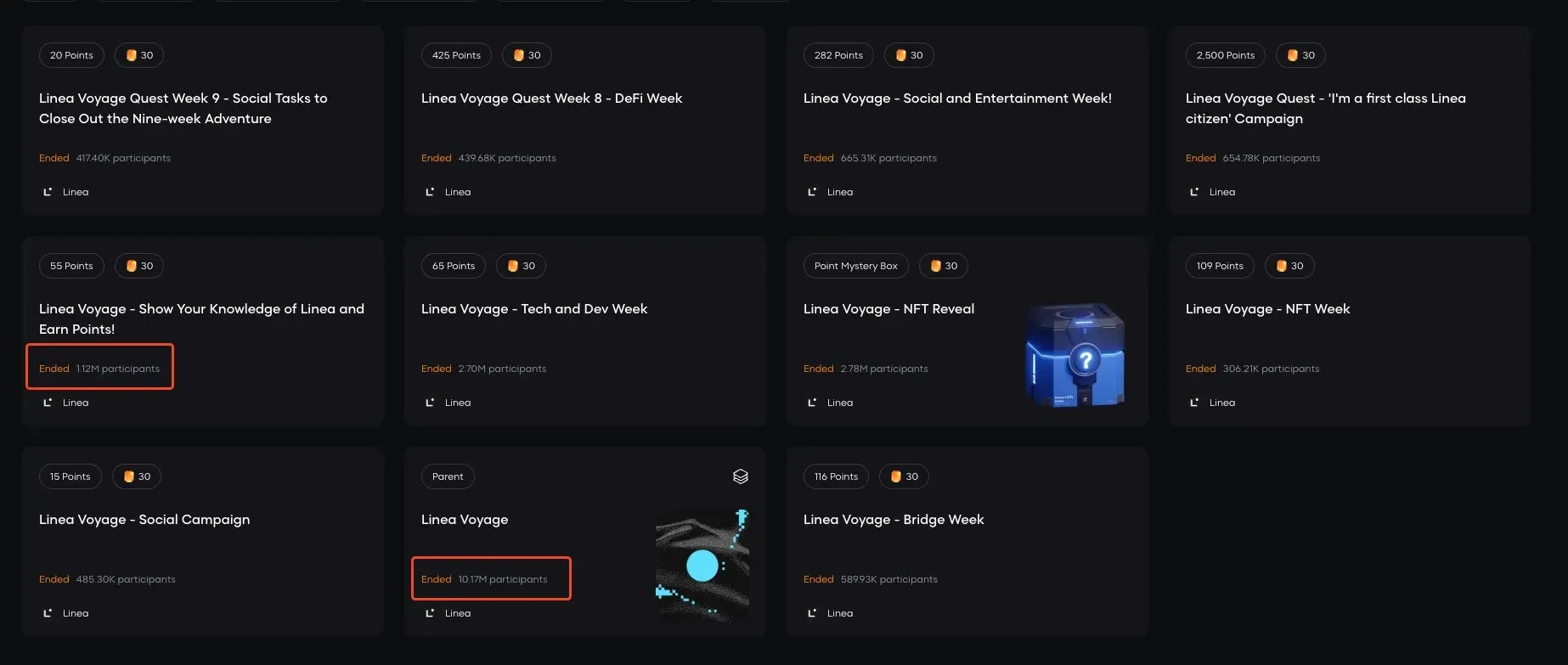
Or those like OpenSea that run endless campaigns that care more about farming users to burn fees on repetitive and grindy tasks.


Instead, I would prioritise those projects that publicly share that they’re looking for quality over quantity.
Some examples include:
@fluentxyz‘s testnet that rewards high-quality feedback
Sanctum’s Earnestness allocation that rewarded long-term alignment based on meaningful contributions (though they didn’t announce this before TGE)


Those who go for the quality route are rare, because it’s harder and more time-consuming to analyse the metrics.
MegaETH’s presale allocation took a few days to complete as they did multiple analyses using different social and onchain metrics.
I would go for those projects that do not publicly launch any campaign, because:
They’re not encouraging you to farm them (which attracts less competition)
There’s no transactional relationship (complete these tasks and possibly get a reward in the future)
Less dilution by Sybils and farmers (there’s more uncertainty)
How the team structures their incentive campaign (or keeps it intentionally ambiguous) will determine the type of user it attracts.
And if it’s optimised towards attracting farmers for vanity metrics, it’s a skip for me.
Meanwhile, I will optimise focus on these types of campaigns:
Point programs with fixed distributions every week
Point programs with no known criteria (distribution is usually based on retroactive activity for that week)
Campaigns with barriers to entry (e.g. reputation thresholds)
The best airdrops still come from retroactive distributions that are based on your interactions with the project or other related ecosystems (just like Monad)
My verdict
Interact: Rewards prioritise quality and alignment
Ignore: Incentives favour mass participation and overdiluted farming
How spammy are their social tasks?
I see social tasks as the lowest value action that any project could reward.
This does not include InfoFi campaigns, but are simple ones that involve following, liking and RT-ing a project’s tweet.
Galxe and Zealy are famous for running such campaigns that have endless social tasks just to claim an OAT for the airdrop.
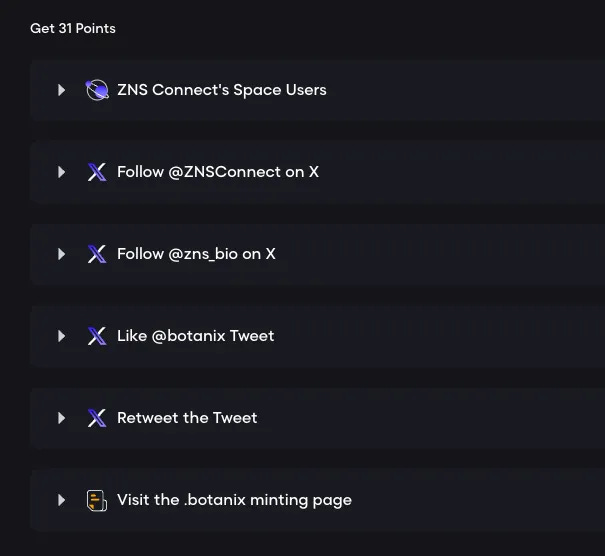
Which is why I’ve completely stopped using them.
These are campaigns that I’ll skip immediately, because there’s no point wasting 5 minutes of my life doing all of these tasks when thousands of bots can perform the same action as me.
Some social tasks involve changing their Twitter profile name to add a project label like ꧁IP꧂, Ⓜ️Ⓜ️T, or ETHGas ⛽, where they’ll earn points that ‘could’ lead to an airdrop (but it gets heavily diluted since it has a low barrier to entry).


Some would ask their ‘community’ to change their profile picture too, until every account becomes a clone of one another.


Projects that engage with such spammy behaviour are ones to avoid since they’re willing to capture attention at all costs (which likely means their product is not good enough).
My verdict
Interact: Social tasks are not a core interaction to get an airdrop
Ignore: Campaigns are solely focused on social tasks that can be easily replicated
How time-sensitive are their tasks?
Projects like to create artificial scarcity through time-sensitive tasks, either through FCFS or by having limited time windows for certain Discord roles or other NFTs:


I would avoid projects that continuously use these tactics, because I value my time and don’t want to be constantly scrolling through CT or other campaign platforms just to be early to these opportunities.
There’s no skill involved except being the fastest fingers, and that would burn me out.
My verdict
Ignore: Projects repeatedly using artificial scarcity with FCFS mechanics
Do they shill their prize pool?
The main reason why airdrops have become boring is how projects are shilling them now.
You know the prize pool beforehand, even before the token launches, with InfoFi campaigns putting a dollar value to it.


Those who constantly shill their airdrop amount or allocation percentage are attracting farmers and prioritising vanity metrics over long-term usage.
My verdict
Interact: Rewards are not stated beforehand
Ignore: Prize pools are aggressively marketed by the team and platform
Do they mention their snapshot before TGE?
EtherFi drew a lot of flak when almost 6% of ETHFI was allocated to Justin Sun, when he deposited 120k ETH into the protocol just 3 days before the snapshot.


Not sure if he had any insider info about the snapshot, but this drew outrage from the community, and they switched their distribution to a minimum allocation so long as you hit the criteria.


Since then, I’m skeptical of projects that announce their token days before the snapshot, as it’s encouraging another EtherFi-Justin Sun scenario.
The ones I could remember include:
Kamino


Scroll

Phi

If the airdrop distribution is based on liquidity, all the points of early depositors could be significantly diluted by whales who enter at the last minute.
These are beyond our control and would only surface weeks before TGE, but it’s another red flag to avoid or manage my expectations when the allocations are out.
My verdict
Ignore: Snapshots are announced early to invite last-minute farming by whales
What kind of anti-Sybil measures do they use?
Airdrop distributions are essentially a war between projects and Sybils, and there will never be a perfect system that eliminates all Sybils while making every real user eligible.
There have been many anti-Sybil measures, including Gitcoin Passport (now Human Passport) and Trusta Score, but I find these ineffective because all the metrics are publicly known and can be gamed.


Gitcoin Passport used to have simple metrics for the GitHub connection with just your account age, but it is now more complex by measuring your real contributions.
Ironically, projects that used messaging like ‘real users only’ typically encourage more farming (and eventually more outrage as more got filtered out)


And there’ll be those ‘Proof of Humanity’ scores that require you to mint a $3 NFT just to prove that you’re a human.


When a project claims that they’re ‘protecting their true community’ by introducing Proof of Personhood or other Sybil measures, I’m taking it as a red flag.


That’s what happens when the incentives are designed poorly, and they realised that they’ve attracted all the farmers that will ruin their distribution.
I don’t think there’s a perfect system, but I do think that ZKsync’s TWAB metric was effective in removing Sybils that were spamming the network based on Arbitrum’s criteria.
Though it still sparked a lot of outrage since known Sybils from LayerZero and other airdrops were still rewarded, and many ‘real users’ were eliminated.
I would stay away from projects that use a Gitcoin Passport/Trusta Score metric for Sybil resistance, since Sybils can grind to be eligible through CEX KYCs or buying aged accounts.
If the cost of gaming the system is lower than the actual reward, these systems can be gamed and the allocations will be diluted.
My verdict
Interact: Sybil resistance is based on thoughtful analysis
Ignore: Using scores that can be easily exploited through KYC, or NFT mints that are just giving the team money
Is there a public yapper leaderboard?
While this factor matters less now with the death of the dopamine yapper, the same logic still applies to whatever form these yapper leaderboards evolve into.
I have less motivation to interact with a project that runs an InfoFi campaign, even through the onchain route.

InfoFi campaigns give me an indication that the project cares more about vanity metrics and short-term attention.
Especially when the project itself is so new, and there’s nothing to talk about it (and the project should focus on building a better product first).
I remember Mira Network launching a yapper leaderboard when their only product didn’t even work for me.


I’d be even more wary of projects with InfoFi campaigns that encourage farming by asking others to ‘just yap harder’.


Or projects that post cringe content with the goal of getting engagement from yappers:
The more I see something being shilled on the timeline, and I discover that it runs an InfoFi campaign, I’d avoid it completely.
I’m convinced that the best products let word of mouth be organic, while those that try to rush it with InfoFi are just desperate for attention.
My verdict
Ignore: Projects that run InfoFi campaigns
What referral programs are there?
We’re in a world of paid ads, where every tweet you see on the timeline could be an undisclosed shill.

So when a ‘KOL’ declares that they are bullish on something, I am skeptical.
Suddenly, everyone’s telling you that perp DEXes will give you the best airdrops, and all you need to do is farm volume.
Do they truly believe that, or are they just farming you to get their referral commissions?
In every post, I would look at the links that they include to see if they’re a clean one or with a referral embedded.
The KOL’s track record (through a simple scroll on their profile) lets us clearly see what projects they are promoting. And if they’re all those with referrals, then I wouldn’t trust that they’re really bullish about it.
It’s fine for projects to run referral programs, but I would want to observe the impact of referrals (especially if there’s a public leaderboard).
If there’s no way for a normal user with no referrals to effectively compete with a KOL, then I would prioritise this airdrop less (since it highly favours KOLs).
My verdict
Interact: Referrals do not heavily impact rankings
Ignore: Rankings heavily favour KOLs with big influence
Interactions
After evaluating all of the factors above, it’s finally time to consider the onchain and social interactions I’ll be doing for that project:
How much time do I need to spend on it?
I don’t want airdrops to turn into yet another job for me.
It used to be lucrative just by grinding campaigns or daily check-ins, but with more dilution, the ROI on our time is getting worse.
Even though it takes just 2 minutes to complete, all of this mindless grinding adds a lot of cognitive load to my brain.

Time is now my most precious asset, and I don’t want to waste it clicking or talking about projects that I don’t even like.
So right now, I ask myself one question before any interaction:
Does this action drain me or energise me?
I would skip those that drain me because it’s a bad use of my time, while focusing on those actions that energise me.

My verdict
Interact: If actions energise me
Ignore: If it feels like another job
How much capital do I need to spend on it?
Time and capital are the 2 main resources we’ll spend on any airdrop.
Capital is something that is limited for most of us, and we’ll likely lose out to whales for liquidity-based airdrops.
Given the risks of putting funds inside a new protocol, I’m only willing to deposit $500-$1k for an airdrop (in the initial phase).
I used to randomly throw my funds into any tokenless protocol, but I want to be sure that this amount gives me a good chance for a decent ranking.
So I’ll look at other metrics like the public leaderboard or the points distribution rules to see if there’s something worth depositing.
Some like Anzen Finance gave a decent return, even for a small deposit.


My verdict
Interact: Limited capital can still have an impact (likely because it’s underfarmed)
Ignore: Airdrops that heavily favour whales
These are harder to find now, but I’d be more cautious with allocating my capital after experiencing some near misses:
What are the risks that I would incur?
The best airdrops (according to @serpinxbt, and which I agree with) come when you adopt higher risks:
The same principle was applied to ZKsync’s airdrop that rewarded risk-on individuals (who interacted with DeFi protocols), rather than risk-off bots that were focused on pumping transaction count and volume.
But while going all in on risk could yield crazy returns, we’d need to manage our risk well with the main goal of preserving our capital.
There are always risks involved when we deposit our funds in new (and likely unaudited) smart contracts.
Even audited smart contracts will be exploited, and nothing is 100% safe.


So here are some considerations for me:
How credible are the lending-borrowing platforms (LBPs) I deposit in?
What is the withdrawal period when I lock up my funds?
Even with high yields, most of the new lending-borrowing platforms are too risky to put my funds in. One oracle exploit is all it takes to destroy one platform, and it could even affect the liquidity across the entire ecosystem.


In the past, I used to chase high lending yields without thinking of the risks, but I’m way more cautious now.
Vaults that help you find the best yields automatically could make mistakes like this:


Even Morpho could be risky since they are vaults with their individual strategies, and they could expose you to risky protocols like Stream Finance (which was exploited).

The only LBP that I can trust 90% is Aave, while I’d be more cautious when depositing or even locking up my funds in any smart contract.
While audits don’t mean anything, I’d be more focused on the strategy that the vault or fund uses and determine if it’s worth depositing or not from there.
I’d also look at the withdrawal process (some may require bridging for liquidity) to determine if it’s worth my time to deposit a small amount yet having to go through a complicated process.
My verdict
Interact: Risks are manageable without huge potential losses on capital
Ignore: Lending-borrowing platforms or those with higher perceived risk due to lockups or protocols with a past track record
What is my edge in this airdrop?
In the world of airdrops, anything that can be exploited will be exploited.
Any action that can be replicated at scale will be done by Sybils, bots, and even those with multiple wallets.
It’s getting harder and harder to stand out, so we have to ask ourselves:
What actions can I perform to differentiate myself from Sybils?
Which is why I’m not a fan of incentivised testnets, because anyone can spin up thousands of wallets to farm it and dilute everything.
That’s why I believe that a strong onchain and social reputation is the edge, since it can’t be easily replicated, yet it shows that I’m a high-value individual who deserves the airdrop.
But apart from reputation, there could be other ways that you can get an edge:
A trading strategy that maximises your points
Holding blue-chip NFTs or SBTs
Meaningful contributions to projects that you truly believe in
If you have any edge that not everyone has, use that to your advantage.
If there’s no chance of standing out, there’s a lower chance of getting a good airdrop.
My verdict
Interact: If I have an edge to stand out
Ignore: All actions considered by the project can be replicated easily
Are these interactions something I’d be doing elsewhere?
This is a big win since I could be doing my daily actions with a tokenless protocol, instead of one that has already launched a token.
There are some caveats to this:
Projects like Monad could reward our onchain footprint on high-quality protocols like Aave or Uniswap (both already having tokens)
The product of this tokenless project has to pass the good UI test first; if not, it’ll be another case of grinding something that I hate
Whenever possible, I’ll try to stack up opportunities and find ways to hit different tokenless protocols either through aggregators or using a different route.
My verdict
Interact: Actions align with my usual onchain routines
Ignore: I’m forced to farm a project that I would not use
How can I profit from the project?
This is the most important factor for airdrops right now, because they are becoming more and more like a bonus.
We have to make money through the project first (either through yield or profits), and then getting the airdrop as a reward for our consistent interactions.
The age of burning fees just to get an airdrop to breakeven no longer works because everyone is using the same strategy until it becomes overdiluted.
I still have a lot to learn to trade effectively, but we can no longer rely on the airdrop itself to get a good return in our time and capital investment.
My verdict
Interact: If I can make a profit with my interactions
Ignore: The only upside involves a speculative airdrop with no guarantee of breakeven
Some factors are beyond our control
This framework is meant to analyse a project before its TGE, so there are other factors that I did not include, like:
The fairness of the actual distribution criteria
Tokenomics and FDV of the token
Vesting criteria
The claim process
Most of these details would only be revealed closer to the date of the airdrop or TGE.
And by then, it’s too late to decide if it’s worth interacting with that project or not.
In most cases, there’ll be some drama with complaints about the allocation or how it’s not ‘favourable’ to the community (once these are released).
At this time, there’s nothing much we can do if the terms are bad. I would just manage my expectations and move on since the airdrop will most likely be disappointing.
Airdrops are essentially a risk because we go in blind and only know the rewards afterwards.
There’s no obligation for the project to reward you, even though you put in so much effort, just for it to be deemed as a ‘low-value contribution’.
But sometimes it could be scammy teams who chose to reward insiders.
This is why I’m moving away from actively chasing airdrops and using this approach instead:
The best airdrops come from chasing nothing
This entire checklist is meant to guide your thinking about whether a project is worth interacting with or ignoring.
I don’t think any project could hit all the criteria I listed in this framework, as none would be perfect.
But as more red flags appear based on what I see, I’ll be more skeptical and choose to interact less with it.
It also doesn’t mean I’ll completely ignore a project once it has red flags, but I would manage my expectations accordingly.
There are too many opportunities out there now, but it doesn’t mean we have to farm them all.
Sometimes, not interacting with a project is a better play (just like not making a trade) to preserve my capital and time, rather than risking it just for the sake of some tokens that eventually give a low ROI.
In this current age, less is more for airdrops.
I’d want to caution against having an ‘itch’ to always be looking for the next airdrop. I get so many questions about ‘what is the next best airdrop to farm now?’, and I honestly don’t know.
The best airdrops come as surprise airdrops, because of the social and onchain reputation we’ve built. We explore projects organically because we have a real need for them, and we share our authentic thoughts online with the algo finding those who resonate with it.
And since this profile can’t be replicated by Sybils, it proves that we’re authentically human and become a magnet for airdrops and followers.
I shared more about this concept below:
And if you’d like to get my raw, unfiltered takes to cut through the noise, join my new channel on Telegram here.
A prompt to help you spot better airdrops
As a thank you for reading this especially long article all the way down, I’ve converted this framework into an entire prompt that acts as your airdrop evaluation thought partner.
Get it here on GitHub.
If you are tired of burning out by grinding mindlessly for airdrops, there is another way. To earn rewards automatically just by being yourself, build a reputation that compounds by joining the 30-Day Signal Creator Challenge.