
To win at airdrops, study the Sybil war

If you’re not learning how Sybils get filtered, you’re falling behind.
Sybils are the only reason why airdrops are so hard right now:
Farms will always find sneaky methods to game it and dilute the rewards for real users.
So Sybils need to be eliminated and we need to learn how to stand out from them.
After listening to @DrNickA’s talk, I have a clearer indication of how I can become Sybil resistant.

Here’s how to future-proof your airdrop strategy and stay Sybil-resistant:
Understanding Sybils
Here’s a simple definition of a Sybil attack:
A single entity pretending to be multiple identities to game a reputation system for gain.
In the case of airdrops:
Sybils pretend to be real users who are eligible for tokens with the aim of dumping their allocation immediately.
This is a problem for projects because it dilutes the allocation given to genuine users, while the price of the token will tank with all the selling pressure.
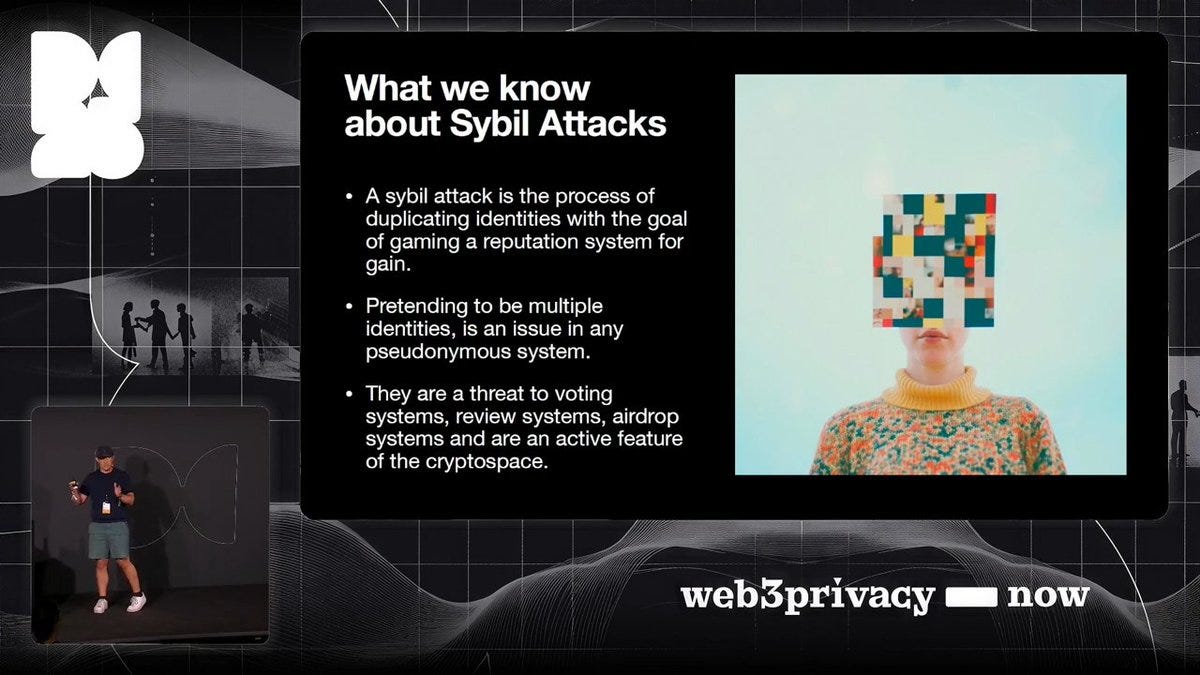
That’s why projects are becoming smarter, and they are using more methods to identify and eliminate Sybils from their airdrop distribution.
But Sybil farms are evolving too, and it leads to this undesirable outcome:
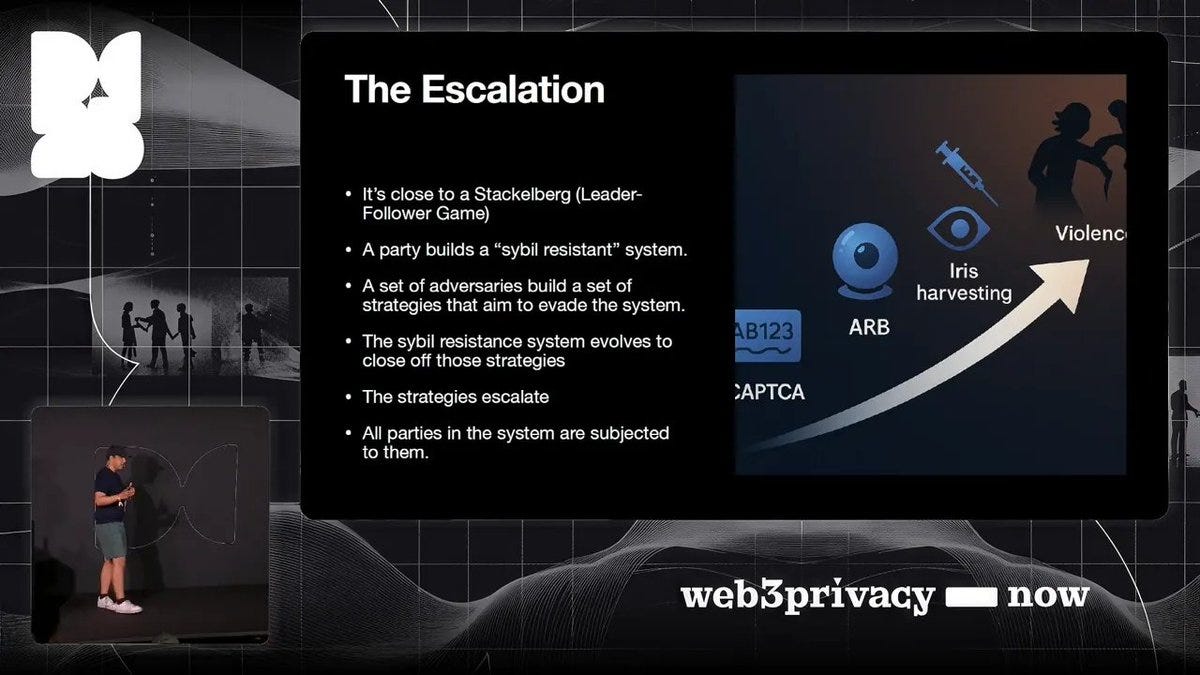
The Sybil war is an escalation game
There are 2 parties who will constantly try to outdo each other:
Projects will keep coming up with new criteria to outsmart Sybils
Sybil farms will create new strategies to bypass Sybil filtering
This leads to an arms race where Sybil resistant systems need to keep evolving to stay ahead of the Sybil farms.
We’ve seen this with other systems apart from airdrops:
Bots and fake accounts have led to Web2 systems using advanced verification systems to eliminate multiple accounts.
Real humans experience increased friction when creating or even logging into their accounts:
Phone number verification before creating a Gmail account
We have to solve complex CAPTCHAs before creating a Twitter account
Liveness detection before using apps
We’ve seen the same for Web3 anti-Sybil protocols:
In the early days of Gitcoin Passport, we just needed an aged GitHub account, but now the criteria are stricter.

Now, we have to prove that we’re a regular contributor with commits on ≥ 30 days.
Monad also mentioned this in their airdrop criteria:
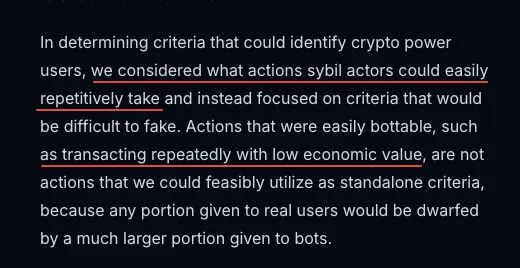
Transaction count, which was a criterion for Arbitrum, is no longer useful.
Wallets with high transaction counts but providing low economic value will now be filtered out.
As anti-Sybil measures escalate, Sybil farms try to find ways of outsmarting them.
Possibly to the point of real humans being eliminated completely.
Some of these protocols try to ‘filter’ out Sybils by getting them to mint an NFT for a certain amount.
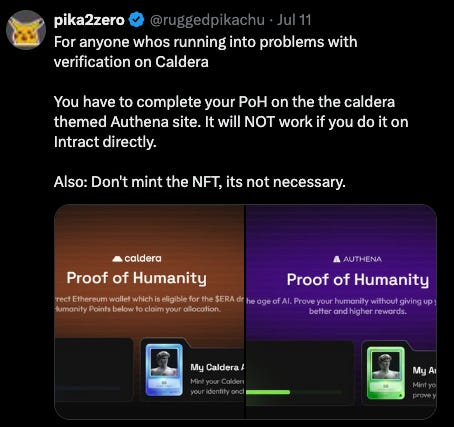
But it’s pointless to get rid of Sybils with a financial barrier since they’d still mint it if it makes financial sense (when the reward is more than the cost).
And it just gives the anti-Sybil protocol more revenue.
Others have used Binance KYC as the main scoring for proving humanity, but that can be gamed too:
Sybils can’t be fought with biometrics or PoH
Proof of Humanity alone is not good enough.

Once World’s system is used for more reward distributions (apart from just the WLD stimmy):
Bad actors will start farming humans for their eyeballs.
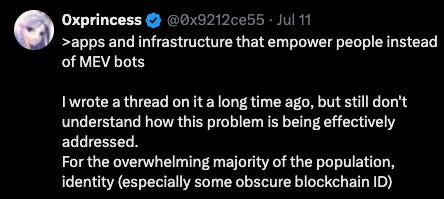
They could kidnap others with the sole purpose of scanning their eyeballs to get their credentials.
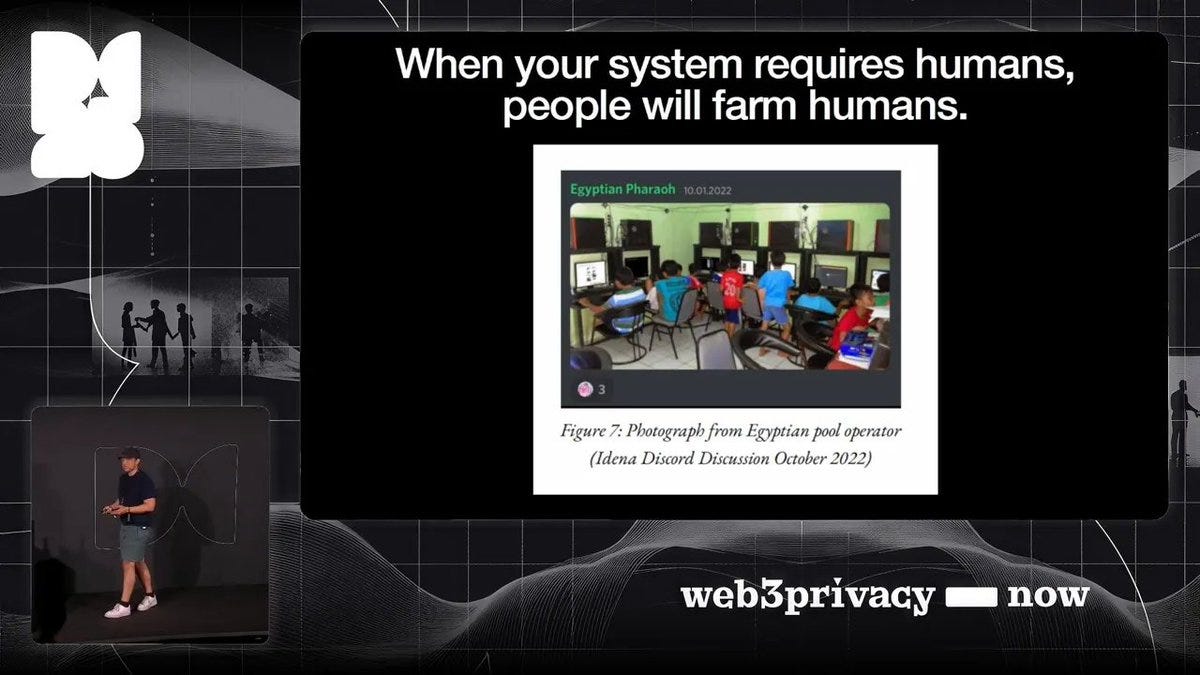
While there’s nothing as scary as that happening right now, we’ve seen other forms of farming humans:
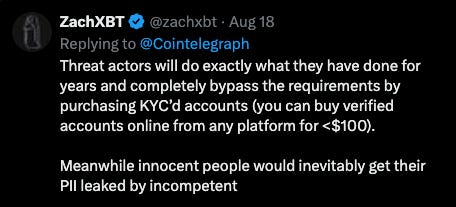
It’s so easy to buy KYC credentials, especially from less developed countries where that ‘small’ fee could cover their daily expenses.
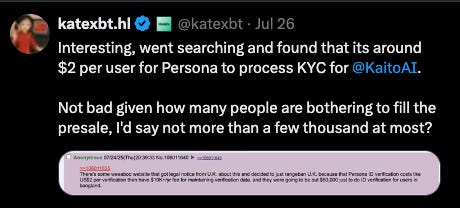
We just needed $2 to buy a Persona KYC, which is not a huge sum for someone who wants to game the system.
KYC or Proof of Humanity alone is no longer a good enough indicator that an individual is deserving of an airdrop.
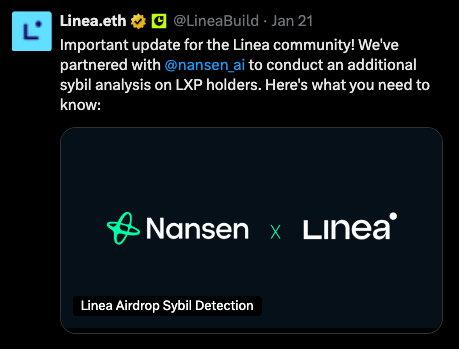
Even with multiple rounds of PoH, Linea still had to perform another round of Sybil filtering.
So if we’re just relying on proving identities for airdrops, this can be easily gamed.
AI might get so good that it fakes these credentials and pose as a real human.
But here’s a better option:
Authentic human identities are the answer
LayerZero performed one of the most intense Sybil witch hunts. This involved:
But not many projects would go to such lengths to identify and eliminate Sybils from their user pool.
So another method is to filter for authentic human identities.
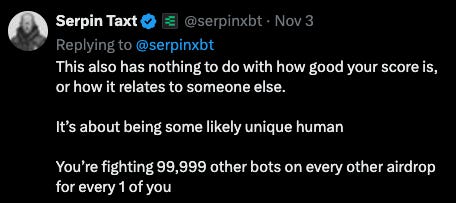
In this age where everything can be replicated:
The Web of Trust is the endgame.
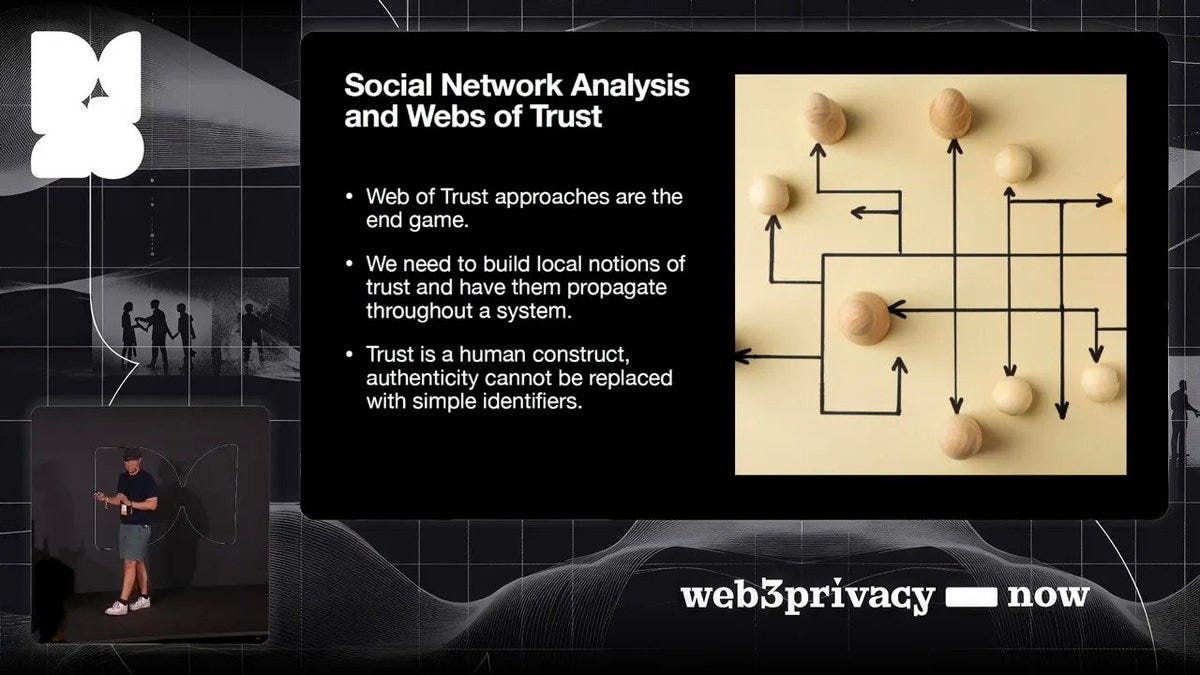
Trust is based on reputation, or the amount of value that you’ve provided to others.

It’s hard for Sybils to enter this Web of Trust because no one knows who they are until they prove themselves.
That’s why Kaito is based on a social graph:
Who you know is more important than how many followers you have.
Your reputation and standing improve when more ‘Smart Followers’ follow you.
A Sybil account can have tons of followers, but they are meaningless if no credible account follows them.
Though this system can be broken too, with known engagement farmers being part of this ‘Inner Circle’ too.
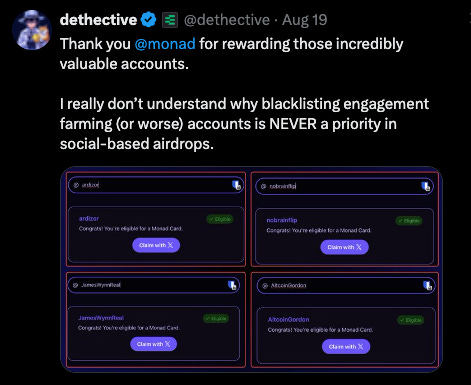
Which is why we need more than one signal to prove someone’s humanity:
Onchain and social are the important pillars
What makes a human unique is a multi-factor of signals that goes beyond just IDs and KYC.

That way, it’s harder to manipulate an identity as compared to relying on just one system.
Which is why combining both social and onchain reputation together is more ideal than just relying on one alone:
Social proves that others see you as valuable
Onchain proves that you actually did what you said (skin in the game)
Combining social and onchain reputation provides more signal in proving the authenticity of a human.
I’ve seen many declare that onchain airdrops are dead, but I see our onchain activity as the foundation of trust:
How can you be a credible person by just yapping mindlessly about every project without even using the product?
Your guides will be surface-level because you don’t use the product and just summarise the documentation.
People will realise that your content is no longer valuable and will ignore you.
Even though it seems like many projects seem to love anyone who yaps about a project:
Onchain will still play a crucial role.
Some projects just want to chase vanity metrics so they won’t look at onchain ones (and these are the campaigns that I’ll avoid).
And if you’re here for the long-term (like me), your reputation is more valuable than any random InfoFi campaign.
Build reputation by giving value
Reputation can’t be gamed by Sybils or fake identities, because it has to be earned.

Projects will no longer throw money at farmers and hope they are converted into long-term users.
Since this allocates more rewards to Sybils instead of real users.
Monad shared how they only wanted to reward:
Power users of major mainnet blockchains
Individuals who care deeply about crypto (social graph)
How many airdrops we qualify for in the future depends on the reputation we hold.
And there’s no need to game any system either, and just be your authentic self:
Interact with protocols that you enjoy using (instead of farming)
Talk about topics that you truly enjoy (instead of whatever pays you the most)
Build a strong social and onchain reputation that proves that you’re a high-value individual and projects can’t help to allocate you tokens.
I shared my strategy for this here.
If you are tired of burning out by grinding mindlessly for airdrops, there is another way. To earn rewards automatically just by being yourself, build a reputation that compounds by joining the 30-Day Signal Creator Challenge.